
Deregulated Energy States vs Regulated: Which Saves Your Business More Money? (The Answer Will Surprise You)
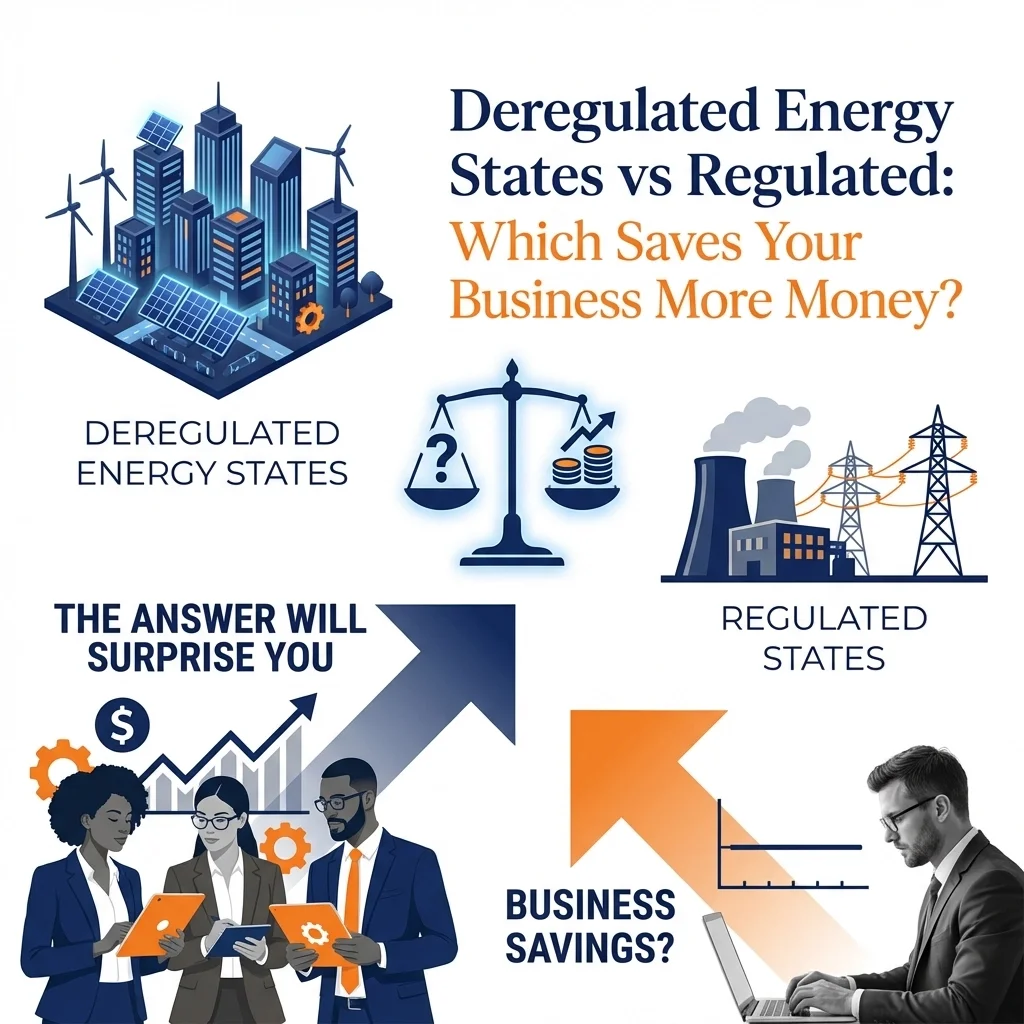
If you run a business in states like Texas, New York, or Pennsylvania, you've probably heard the pitch: deregulated energy markets mean more competition, better prices, and freedom to choose your supplier. It sounds like a no-brainer, right? More options should equal more savings.
Here's where things get interesting: and a little counterintuitive. The data tells a different story than most business owners expect. But before you start panicking about your energy strategy, stick with me. The real answer isn't as simple as "regulated good, deregulated bad." There's a lot more going on here, and understanding it could save your business serious money.
First, Let's Break Down the Basics
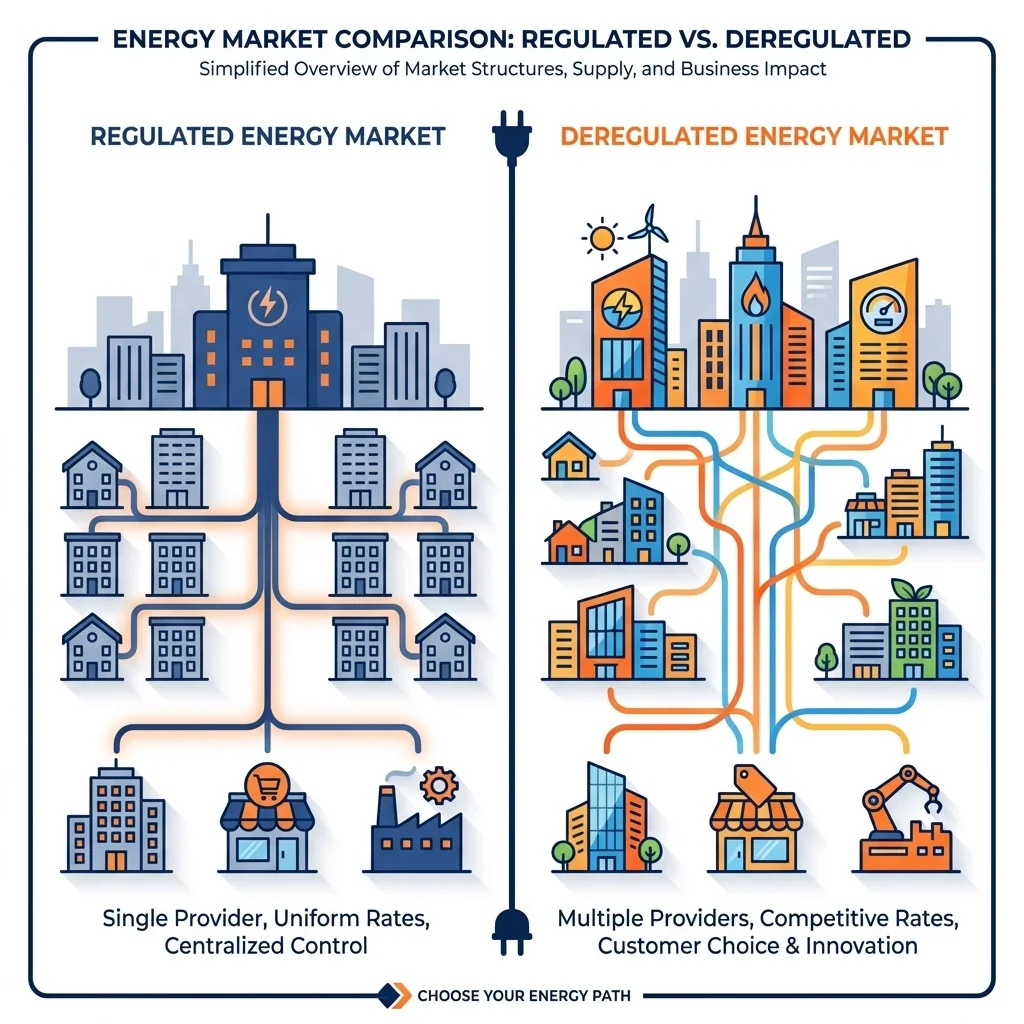
Regulated energy states operate under a traditional utility model. One company handles everything: generation, transmission, and delivery of your electricity. The rates are set by a public utility commission, and you don't get to shop around for different suppliers. What you see is what you get.
Deregulated energy states split things up. The utility still manages the infrastructure (poles, wires, delivery), but you can choose from multiple energy suppliers competing for your business. The idea was simple: competition drives prices down and gives consumers more control.
Currently, about 18 states plus Washington D.C. have some form of energy deregulation. If your business operates in Texas, Ohio, Illinois, New York, New Jersey, or Pennsylvania, you're in a deregulated market.
What the Numbers Actually Show
Here's where the surprise comes in. Despite all that competition, businesses and residents in deregulated states have generally paid more for electricity: not less.
Research from Harvard University and the University of Florida found that after deregulation took hold in the 1990s, generators started charging utilities significantly more for contracts. Without price caps from public utility commissions, the market dynamics shifted.
The hard data:
Since 2012, electricity rates in deregulated states have increased by 2.5 cents per kilowatt-hour
In regulated states, that increase was only 1.4 cents per kilowatt-hour
On average, customers in deregulated markets have paid approximately $40 more per month than those in regulated states
A 2021 analysis put it bluntly: "After 24 years of deregulation, the original promise of reduced prices has not materialized."
That's a tough pill to swallow if you've been operating under the assumption that choice automatically equals savings.
Why Deregulation Hasn't Delivered Lower Prices (For Most)
So what went wrong? A few things, actually.
Wholesale energy costs run higher. Studies show that deregulated utilities faced significantly higher wholesale energy costs compared to their regulated counterparts. Those costs get passed down the line: eventually landing on your business's monthly bill.
The complexity factor. In deregulated markets, there are dozens of suppliers, hundreds of rate plans, and contract terms that vary wildly. Most business owners don't have time to become energy market experts. Without proper guidance, it's easy to end up on a plan that looks good on paper but costs more in practice.
Variable rate traps. Many businesses in deregulated states get lured into variable rate plans that seem cheap initially but spike during high-demand periods. If you've ever seen your summer electric bill double without warning, you know exactly what I'm talking about.
For a deeper dive into what can go wrong, check out our breakdown of 7 energy contract mistakes that will cost you thousands in 2026.
But Wait: There's a Massive Upside to Deregulated Markets
Before you start wishing you could relocate your business to a regulated state, let's talk about the flip side. Because here's the thing: deregulated markets aren't inherently bad for businesses. They just require a smarter approach.
Contract flexibility is real. In regulated states, your utility costs are essentially fixed: what the commission sets is what you pay. Your only option for reducing costs is cutting usage through efficiency projects. In deregulated states, you can actively shop for better rates, negotiate contract terms, and lock in pricing that works for your budget.
Timing matters. Wholesale energy rates fluctuate based on market conditions. Businesses that understand these patterns: or work with consultants who do: can lock in contracts when rates dip and avoid renewals when the market is hot.
Texas proves it can work. Despite operating a fully deregulated market, Texas maintains some of the lowest electric rates in the country. The key? A genuinely competitive market structure and informed consumers who know how to leverage their options.
The bottom line: deregulated markets offer opportunity, but only if you know how to navigate them. Understanding wholesale energy rates is a great starting point.
How Businesses Win in Either Market
Whether you're in a regulated or deregulated state, your energy strategy matters. Here's what smart business owners are doing:
In regulated states:
Focus on energy efficiency upgrades that reduce consumption
Take advantage of utility rebate programs for equipment upgrades
Monitor usage patterns to identify waste
Budget predictably since rates are relatively stable
In deregulated states:
Never auto-renew your energy contract without reviewing current market rates
Compare multiple suppliers before signing anything
Consider fixed-rate contracts for budget predictability
Watch out for hidden fees, early termination penalties, and variable rate clauses
Time your contract renewals strategically based on market conditions
If you're a property owner navigating deregulation, our essential guide to energy contracts in deregulated states breaks down what you need to know.

The Role of Energy Consulting (And Why It Matters More in Deregulated Markets)
Here's where things get real. The businesses that consistently save money in deregulated markets aren't doing it alone. They're working with energy consultants who understand the landscape, have relationships with suppliers, and can cut through the noise.
Think about it this way: an energy consultant's job is to track market conditions, vet suppliers, analyze your usage patterns, and negotiate on your behalf. They see hundreds of contracts every year. You might see one every few years: if you're paying attention.
At United Energy Consultants, we've spent over 20 years helping businesses in the New York metropolitan area and beyond navigate exactly these challenges. With access to more than 80 supplier contacts and proprietary tools like our Energy Tracker Pro software, we help businesses secure competitive rates without the guesswork.
The reality is that deregulated markets can save your business money: but only if you have the right strategy and support in place. Without it, you're essentially gambling with one of your largest operating expenses.
So, Which Is Better for Your Business?
The honest answer? It depends.
If you're in a regulated state, your energy costs are more predictable, but you have less control over pricing. Your best bet is focusing on efficiency and taking advantage of whatever programs your utility offers.
If you're in a deregulated state, you have more opportunity: but also more risk. The businesses that come out ahead are the ones that treat energy procurement as a strategic function, not an afterthought.
The "surprising" answer from the data is that deregulation hasn't automatically delivered the savings it promised. But with the right approach, businesses in deregulated markets can absolutely beat the averages and lock in rates that work for their bottom line.
Ready to take control of your energy costs? Whether you're looking to renegotiate your current contract, explore new suppliers, or just understand your options better, United Energy Consultants is here to help. Let's find out what savings are actually possible for your business.