
Energy Trends 2026: What Business Energy Buyers Need to Know
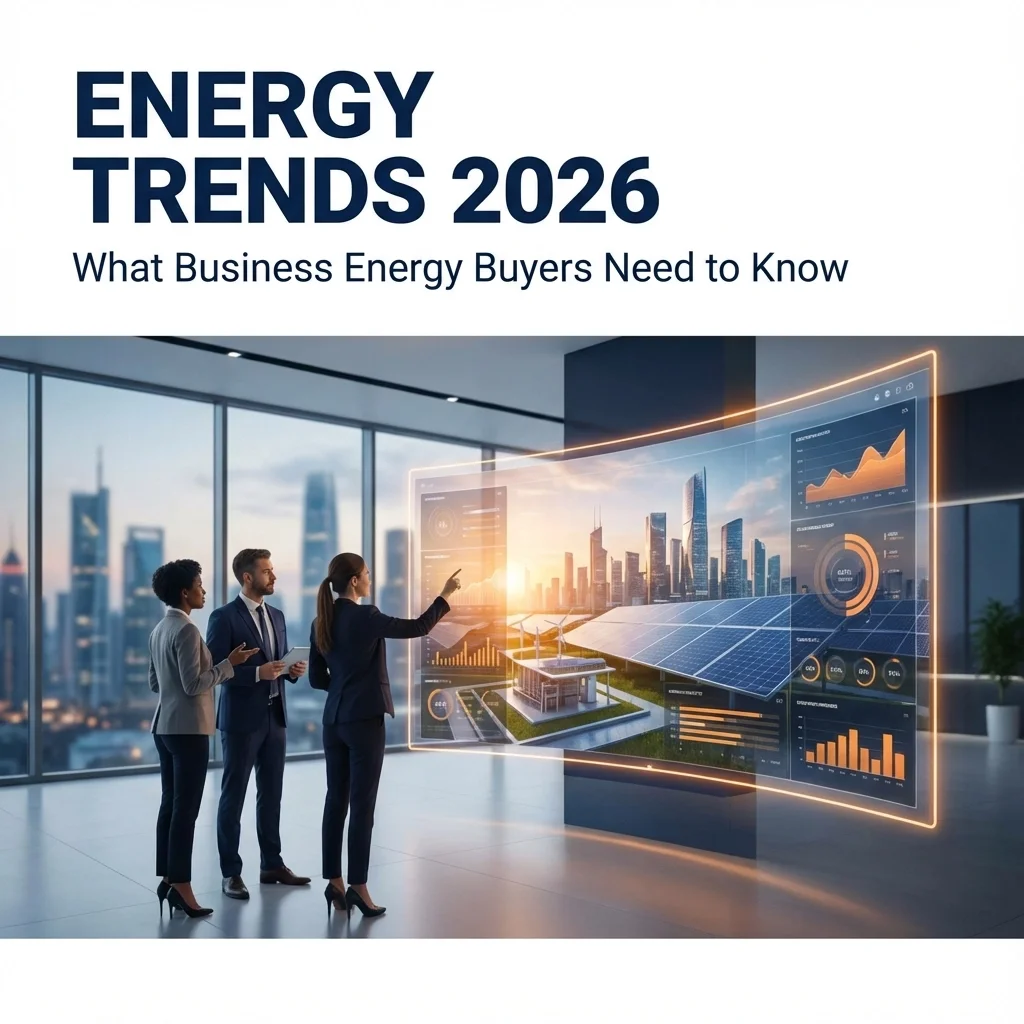
We're six days into 2026, and the energy landscape is already shifting faster than most business owners anticipated. If you're responsible for your company's energy procurement, the decisions you make this year will directly impact your bottom line for years to come.
The energy market isn't just evolving: it's being completely reshaped by forces that seemed like distant possibilities just a few years ago. From artificial intelligence driving unprecedented power demand to renewable energy finally overtaking coal as the world's primary electricity source, 2026 marks a pivotal moment for how businesses buy and use energy.
The Clean Energy Transition Hits Its Stride
Renewable energy is no longer the alternative: it's becoming the standard. The International Energy Agency projects that renewables will officially overtake coal as the world's largest source of electricity in 2026. That's not just an environmental milestone; it's a fundamental shift in how energy markets operate.
In the United States, the numbers tell a compelling story. Through September 2025, renewables accounted for 93% of all new capacity additions, with solar and storage making up 83% of new generation. This isn't happening because of government mandates alone: it's happening because renewable energy has become cost-competitive and increasingly reliable.
For your business, this transition creates both opportunities and new challenges. On the opportunity side, clean power contracts are becoming more accessible and often more affordable than traditional fossil fuel alternatives. The challenge? Everyone else is figuring this out too, which means competition for the best renewable energy deals is intensifying.
AI is Eating the Grid
The artificial intelligence boom is creating an energy demand crisis that most businesses haven't prepared for. Global data center power consumption is projected to jump 17% in 2026 alone, reaching levels that will fundamentally alter energy markets.
To put this in perspective, data centers are expected to consume over 2,200 TWh by 2030: roughly equivalent to India's entire current electricity consumption. That's not a typo. We're talking about AI applications, cloud computing, and digital infrastructure creating energy demand that rivals entire countries.
This surge is already reshaping how businesses compete for power. Access to reliable electricity has become the leading factor in data center site selection, ahead of even internet connectivity. If you're in an energy-intensive industry or located in regions with significant data center development, you're now competing with some of the world's most well-funded companies for the same grid connections.
The practical impact? Expect higher prices for reliable, flexible power, especially during peak demand periods. Grid connections that were readily available just two years ago are now becoming bottlenecks that can delay business expansion plans.
Battery Storage Changes Everything
Energy storage is the bridge technology that's making 24/7 clean power finally viable for businesses. Global energy storage capacity is forecast to reach 123 GW by the end of 2026: a 33% increase from 2025 levels.
The United States alone will install almost 15 GW of new battery storage capacity this year, with significant expansion also happening in Germany, Australia, and the UK. This isn't just about storing excess solar power for evening use; it's about creating a fundamentally more flexible and resilient energy system.
For business energy buyers, battery storage means solar-plus-storage solutions are becoming increasingly competitive with traditional grid power. More importantly, it means you can potentially achieve greater energy independence while still maintaining reliability. The days of choosing between clean energy and reliable energy are ending.
Supply Chain Reality Check
Geopolitical tensions and trade policies are creating new complexities in energy procurement. New foreign entity of concern (FEOC) sourcing rules targeting equipment linked to China, Russia, Iran, and North Korea take effect in 2026, potentially affecting both costs and availability of energy infrastructure.
China's continued dominance across clean energy supply chains: from solar panels to battery storage to electric vehicle components: creates both opportunities and risks. While Chinese manufacturing has helped drive down clean energy costs, it also creates strategic dependencies that trade policies and geopolitical events can disrupt.
For your energy procurement strategy, this means building more flexibility into your contracts and timelines. Equipment delivery delays, cost fluctuations due to tariffs, and the need to source from diversified suppliers are becoming standard considerations rather than exceptional circumstances.

The Execution Economy
The era of ambitious net-zero announcements is giving way to practical execution and cost discipline. Across the energy industry, companies are shifting from making bold promises to actually delivering results at competitive prices.
This change in focus is beneficial for business energy buyers. Developers are prioritizing cost reductions across equipment, design, engineering, and labor while working to accelerate project timelines. The result is more realistic pricing in energy contracts and a greater emphasis on delivering tangible local benefits: cleaner air, stable energy bills, and visible economic development.
For your business, this means energy procurement negotiations in 2026 will likely be more straightforward and commercially focused than in previous years. Suppliers are less likely to oversell capabilities they can't deliver and more focused on meeting concrete performance metrics.
Grid Modernization and Digital Tools
The electricity grid is getting smarter, but bottlenecks remain a critical constraint. With 76% of US power and renewable energy executives planning to increase AI spending in 2025, the industry is investing heavily in digital twins, advanced analytics, and automated systems.
These technological improvements are making the grid more efficient and responsive, but they can't solve physical capacity constraints overnight. Strategic location matters more than ever: businesses with access to regions offering cheap, reliable, and clean electricity at scale will have structural advantages throughout 2026.
The practical implication for your business is that energy procurement needs to be integrated with your facility and expansion planning. The old approach of choosing a location first and figuring out energy second is becoming increasingly risky.
What This Means for Your Energy Strategy
The energy market in 2026 rewards businesses that are proactive, flexible, and strategic in their approach to procurement. US electricity generation is forecast to grow 1.7% this year, which sounds modest until you factor in the AI-driven surge in specific sectors and regions.
If you're still operating with energy contracts from 2024 or earlier, you're likely missing opportunities to reduce costs and improve sustainability. The rapid changes in energy markets mean that contract terms, pricing structures, and available options are evolving faster than traditional procurement cycles.
The businesses that will thrive in this environment are those that treat energy procurement as a strategic advantage rather than a necessary expense. This means staying informed about market developments, maintaining relationships with multiple suppliers, and being prepared to adjust your energy strategy as conditions change.
Energy procurement in 2026 isn't just about finding the lowest price: it's about securing reliable access to clean, affordable power that supports your business growth while managing the increasing complexity of supply chains, grid constraints, and regulatory requirements.
The companies that master this balance will find themselves with a significant competitive advantage as energy costs and reliability become even more critical factors in business success. Those that don't risk being caught off guard by a rapidly evolving market that rewards preparation and punishes complacency.
The question isn't whether these trends will impact your business: it's whether you'll be ready to capitalize on the opportunities they create. Start planning now, because in the energy market of 2026, the early movers get the best deals.