
Navigating New York's Energy Market: A Business Owner's Guide
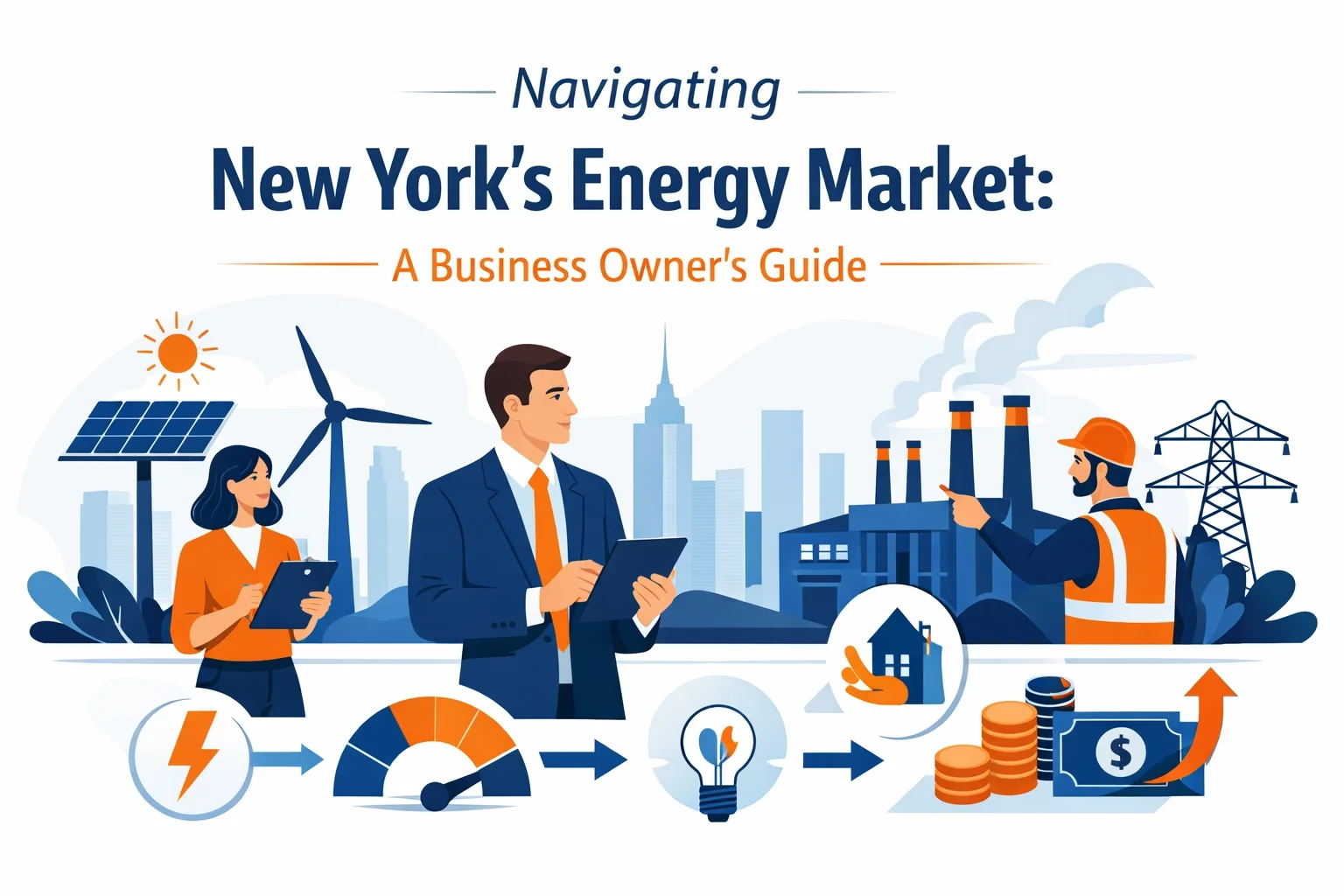
New York business owners are facing a perfect storm in 2026. Con Edison has proposed substantial rate increases: 11.3% for electricity and 13.4% for natural gas: affecting over 368,000 commercial accounts across New York City and Westchester County. These increases take effect January 1, 2026, following approval by the New York Public Service Commission.
For a typical small business, summer bills are expected to rise by approximately 8%. Larger commercial users averaging 10,800 kWh per month with 30 kW demand may face increases closer to 9.8%. Add in the state's aggressive Climate Leadership and Community Protection Act (CLCPA) mandates: including 100% emissions-free electricity by 2040 and 9,000 MW of offshore wind by 2035: and the result is a market environment where volatility is the new normal.
The good news? New York's deregulated energy market gives you choices. And the smartest choice for most businesses is a Fixed Pricing Contract that locks in stability while the grid undergoes massive transformation.
Understanding Energy Deregulation in New York
New York's energy market operates under a deregulated structure managed by the New York Independent System Operator (NYISO). Here's what that means for your business:
You Have Two Bills, Not One
Your electricity service is split into two components:
• Delivery charges – paid to your utility (Con Edison, National Grid, NYSEG, etc.) for maintaining the poles, wires, and infrastructure
• Supply charges – the actual cost of the electricity itself, which you can purchase from competitive suppliers
The utility still delivers your power and handles outages. But you can shop for a supplier that offers better rates, contract terms, or service options than the utility's default supply rate.
Why This Matters Now
Utility default rates are not fixed. They fluctuate with wholesale market conditions, which means your supply cost can swing dramatically from month to month. In a rising market: like the one we're experiencing in 2026: that volatility translates directly into unpredictable overhead costs.
Deregulation gives you the power to lock in a fixed rate with a competitive supplier, protecting your business from price spikes and budget uncertainty.

The New York Market: Unique Challenges for Business Owners
NYISO operates one of the most complex energy markets in the United States. Several factors make New York particularly volatile:
Capacity Market Pressure
New York's capacity market ensures sufficient generation resources are available during peak demand. As older fossil fuel plants retire and renewable projects face delays, capacity costs have been climbing. For businesses, this often shows up as higher monthly charges: even if your energy consumption stays flat.
Transmission Congestion
New York City and Long Island experience frequent transmission bottlenecks. When demand exceeds the capacity of transmission lines bringing power into the region, wholesale prices can spike dramatically. This congestion risk is embedded into the utility's variable supply rates.
Policy-Driven Costs
The CLCPA mandates aggressive decarbonization targets. While necessary for long-term sustainability, these policies introduce costs related to grid upgrades, renewable integration, and emissions reduction programs. These costs are increasingly passed through to commercial customers via supply and delivery charges.
Weather Sensitivity
New York's climate extremes: winter cold snaps and summer heat waves: drive demand surges that can push wholesale prices to multi-year highs in a matter of hours.
For a restaurant owner in Queens, a manufacturer in Buffalo, or a real estate firm managing properties across the five boroughs, these factors add up to one reality: your energy costs are exposed to forces you can't control.
Why Fixed Pricing Contracts Are the Best Strategy for NY Businesses
A Fixed Pricing Contract is the single most effective tool to insulate your business from New York's market volatility. Here's why:
1. Budget Certainty in an Uncertain Market
With a fixed-price contract, your supply rate is locked for the duration of the term: typically 12 to 36 months. You know exactly what your per-kWh cost will be, regardless of wholesale market fluctuations, extreme weather events, or policy changes.
This certainty allows you to forecast operating costs accurately, protect profit margins, and avoid the cash flow disruptions that come with unexpected energy bill spikes.
2. Protection from Rate Hikes and Market Spikes
The Con Edison rate increases taking effect in January 2026 are just the beginning. As the grid integrates more renewables and capacity resources tighten, additional upward pressure on rates is likely.
A fixed contract acts as a hedge. When wholesale prices surge: whether due to a summer heatwave, natural gas price volatility, or transmission constraints: your rate stays the same. Businesses on variable or utility default rates will see those spikes reflected immediately in their bills.
3. Simplified Energy Management
Running a business is complex enough. Fixed pricing eliminates the need to monitor daily or monthly energy market movements. You sign the contract, and your supply cost is set. No surprises. No need to second-guess whether you should have locked in earlier or waited longer.
4. Multi-Location Flexibility
For businesses operating across multiple sites in New York: restaurants with several locations, real estate portfolios, or manufacturers with facilities in different utility territories: a fixed-price strategy allows you to aggregate accounts and negotiate volume-based pricing. This approach reduces administrative complexity and often results in better overall rates.

How United Energy Consultants Protects New York Businesses
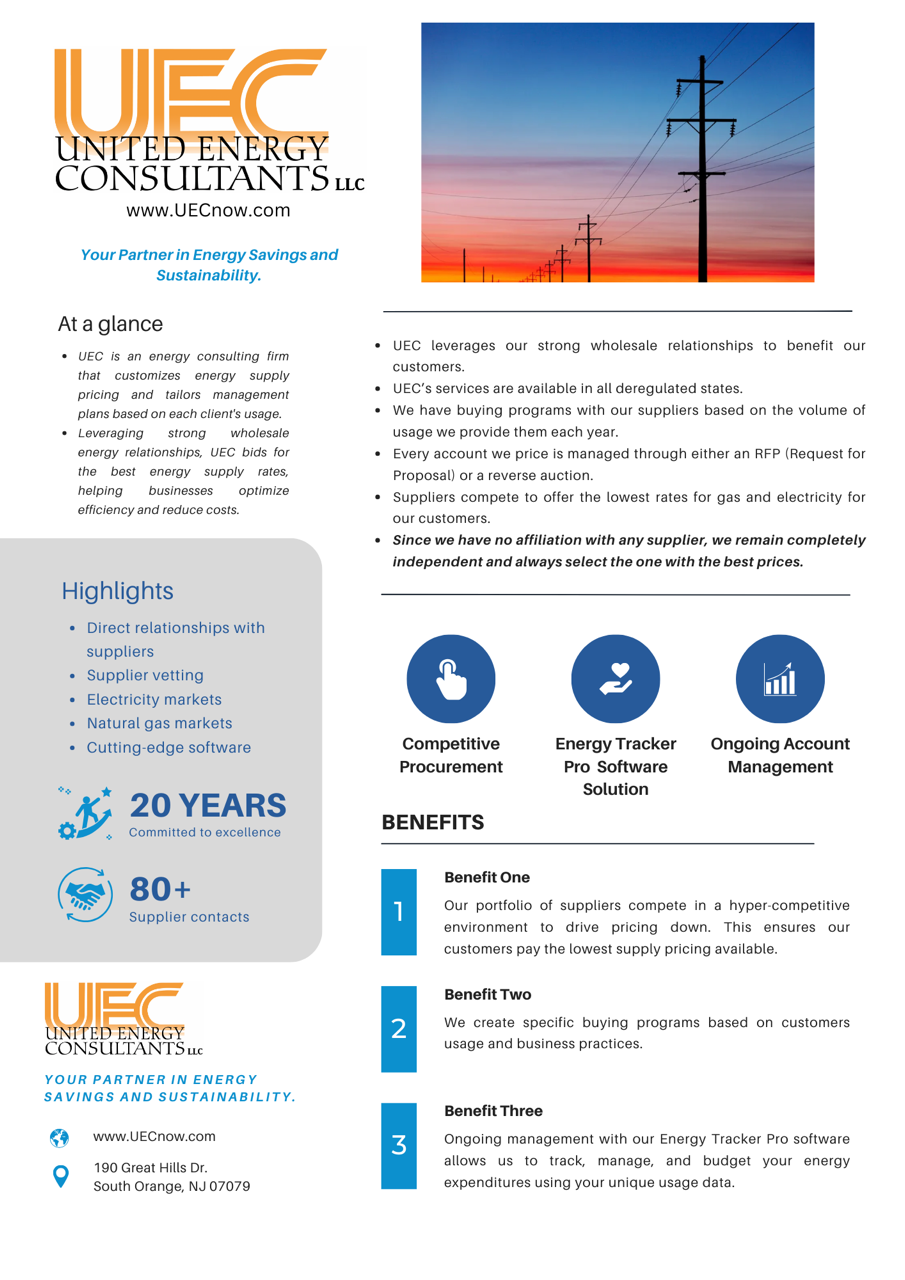
At United Energy Consultants (UEC), we've spent over 20 years helping New York businesses navigate the complexities of the deregulated energy market. We understand NYISO, we understand the risks unique to the New York grid, and we understand how to structure contracts that protect your bottom line.
Total Independence: No Supplier Affiliations
Unlike many brokers, UEC is not tied to any supplier. We represent you, not them. This independence allows us to shop the entire competitive marketplace: over 80 suppliers: and negotiate terms based solely on what's best for your business, not what generates the highest commission for us.
Energy Tracker Pro: Data-Driven Decision Making
Our proprietary Energy Tracker Pro software gives you complete visibility into your energy usage across all locations. You can see consumption patterns, compare rates, track contract expiration dates, and identify cost-saving opportunities: all in one centralized platform.
This data-driven approach ensures that the fixed-price contract we negotiate is tailored to your actual usage profile, not generic assumptions.
Zero Out-of-Pocket Cost
Our consulting and procurement services come at no direct cost to you. We're compensated by suppliers only when we successfully execute a contract that meets your requirements. That means you get expert guidance, market intelligence, and aggressive negotiation: without paying consulting fees or retainers.
Proactive Contract Management
We don't disappear after you sign a contract. UEC monitors your account, tracks market conditions, and alerts you to renewal opportunities or pricing shifts. If market conditions improve before your contract expires, we explore options to "blend and extend" or lock in future rates early.
What New York Business Owners Should Do Right Now
If you're managing energy costs for a restaurant, real estate portfolio, manufacturing operation, or any multi-location business in New York, here's your action plan:
1. Review Your Current Supply Contract
When does your current contract expire? Are you on a fixed rate or a variable rate? If you're on utility default supply, you're fully exposed to the market volatility and rate hikes taking effect in 2026.
2. Understand Your Total Cost Structure
Your energy bill includes supply charges, delivery charges, capacity charges, and various riders. A lower supply rate doesn't always mean a lower total bill. UEC's detailed bill analysis breaks down every line item so you understand your true cost exposure.
3. Lock in a Fixed Rate Before the Market Moves Higher
Forward energy markets are showing upward trends for 2026 and beyond. Waiting to act could mean locking in at higher rates later. The best time to secure a fixed-price contract is when you have favorable market conditions: and professional guidance to confirm you're getting competitive terms.
4. Aggregate Accounts for Better Pricing
If you operate multiple locations, consolidating your accounts under a single supply contract can unlock volume discounts and streamline billing. UEC specializes in multi-site procurement strategies for New York businesses.
Take Control of Your Energy Costs Today
The New York energy market is complex, volatile, and increasingly expensive. But deregulation gives you a powerful tool: the ability to choose your supplier and lock in a fixed rate that protects your business from uncertainty.
At United Energy Consultants, we've helped hundreds of New York businesses navigate rate hikes, market volatility, and supplier transitions. With 20+ years of experience, full independence, and proprietary technology, we deliver results that protect your budget and simplify your operations.
Ready to see how much you can save? Visit www.uecnow.com or contact us today for a complimentary bill analysis. We'll review your current contract, analyze your usage data through Energy Tracker Pro, and show you exactly how a Fixed Pricing Contract can safeguard your business in 2026 and beyond.
Don't leave your energy costs to chance. Lock in stability now.