
Holiday Shutdown Checklist: How to Save Energy When Your Business Takes a Break
The holiday season brings a unique opportunity for businesses: extended closures that can significantly reduce your energy costs. Whether you're shutting down for a few days between Christmas and New Year's or taking a longer winter break, a strategic holiday shutdown can deliver substantial savings on your utility bills while supporting your sustainability goals.
Smart business owners know that energy management doesn't stop when employees go home for the holidays. In fact, this is when you can make the biggest impact on your annual energy costs. Studies show that well-planned holiday shutdowns can reduce energy consumption by 30-50% during closure periods, translating to thousands of dollars in savings for the average commercial facility.
Planning Your Holiday Energy Shutdown
Before your team heads out for their well-deserved break, take time to create a comprehensive energy shutdown plan. This isn't just about turning off the lights: it's about systematically reducing energy consumption across every system in your building while maintaining essential operations.
Start with a pre-shutdown walkthrough two weeks before your planned closure. Document your current energy usage patterns, identify all major energy-consuming equipment, and create a detailed checklist of shutdown procedures. Assign specific tasks to team members so nothing gets overlooked in the holiday rush.
The key is balancing energy savings with business continuity. You'll want to maintain critical systems like security, fire safety, and essential climate control while shutting down everything else.

Lighting Systems: Your Biggest Quick Win
Lighting typically accounts for 10-15% of a commercial building's energy usage, making it your easiest target for immediate savings. Here's your lighting shutdown checklist:
Turn off all non-essential lighting throughout your facility, including office spaces, conference rooms, break areas, and storage rooms. However, keep essential security lighting active for safety and building protection.
Install timers and motion sensors if you haven't already. These devices automatically manage lighting when your building is unoccupied, providing ongoing savings even after the holidays. Motion-activated lighting in hallways and restrooms can reduce lighting energy use by up to 35%.
Consider upgrading to LED lighting during your shutdown period. LEDs use 75% less energy than traditional incandescent bulbs and last 25 times longer. If you're planning facility improvements, the holiday break is perfect timing for lighting upgrades.
Use natural light strategically. Open blinds and curtains during daylight hours in areas where security cameras or essential personnel might need visibility, reducing the need for artificial lighting.
HVAC and Temperature Control: Balance Savings with Protection
Your heating, ventilation, and air conditioning system likely represents 40-50% of your energy costs, making it the most critical area for holiday savings. But be careful: you need to maintain enough climate control to protect your building and equipment.
Adjust thermostat setpoints based on your closure length. For short closures (3-5 days), reduce heating by 10-15 degrees and increase cooling setpoints by the same amount. For longer shutdowns, you can be more aggressive while ensuring pipes won't freeze and humidity stays controlled.
Program your building automation system to automatically adjust temperature schedules during closure periods. Modern energy management systems can reduce HVAC energy consumption by 20-30% through optimized scheduling and setpoint management.
Close all blinds and window treatments to minimize heat transfer. This simple step reduces heating and cooling loads significantly, especially in buildings with large windows.
Change HVAC filters before shutdown to ensure maximum efficiency when systems restart. Clean filters improve airflow and reduce energy consumption when your systems come back online.
Equipment and Electronics: Eliminate Phantom Power Drain
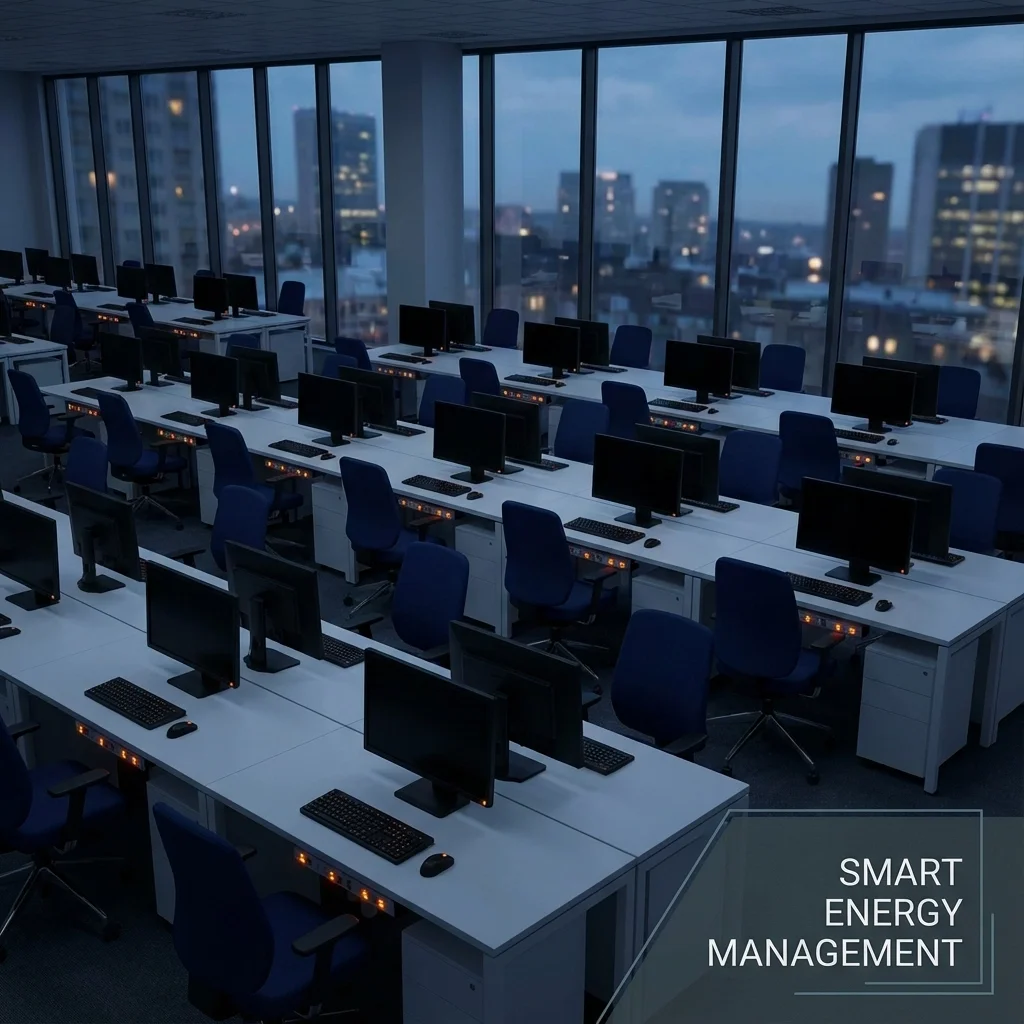
Even when turned "off," many office devices continue consuming energy: a phenomenon known as phantom or vampire load that can account for 5-10% of your total energy usage.
Unplug all non-essential equipment including computers, monitors, printers, copiers, coffee makers, space heaters, desk lamps, and phone chargers. These devices can consume significant standby power even when not in use.
Use smart power strips to make unplugging easier and more comprehensive. Advanced power strips can automatically cut power to peripherals when main devices are turned off, and some can be controlled remotely via smartphone apps.
Shut down servers and network equipment that aren't needed for security or remote access. Work with your IT team to identify which systems can be safely powered down and which need to remain active for essential functions.
Power down manufacturing equipment completely, following proper shutdown procedures for each machine. Industrial equipment often has significant standby loads that continue even when production stops.
Water Systems and Utilities
Water heating can represent 10-15% of your energy costs, making it an important target for holiday savings.
Lower water heater temperatures to 120°F or the minimum safe temperature for your operations. For extended shutdowns, some businesses can turn water heaters off completely, though this requires careful planning to prevent system damage.
Shut off water to non-essential areas if your plumbing system allows it. This prevents energy waste from maintaining hot water circulation in unused parts of your building.
Check for and repair any water leaks before shutdown. Leaks waste both water and the energy needed to heat replacement water, and they're easier to spot when normal operations aren't masking the signs.
Security and Safety: What Must Stay On
While maximizing energy savings is important, never compromise on safety and security systems during your holiday shutdown.
Keep all fire safety systems active including smoke detectors, sprinkler systems, and emergency lighting. Test these systems before shutdown and replace any batteries in battery-backup devices.
Maintain essential security systems including alarms, cameras, and access control systems. Consider upgrading to more energy-efficient security equipment if your current systems are older models.
Keep minimal lighting for safety and security purposes, focusing on entrances, exits, and areas visible to security cameras. Motion-activated security lighting provides good protection while minimizing energy waste.
Maintain freeze protection in climates where pipes could freeze. This might require keeping some heating active or using pipe heating cables in vulnerable areas.
Creating Your Custom Shutdown Checklist
Every business is unique, so customize this general framework to your specific facility and operations:
Two weeks before shutdown:
Conduct energy audit walkthrough
Create detailed shutdown checklist
Assign tasks to team members
Schedule any needed maintenance
Notify utility providers if required
Day before shutdown:
Adjust all thermostats
Begin shutting down non-essential equipment
Test security and safety systems
Verify emergency contact procedures
Day of shutdown:
Complete equipment shutdown procedures
Unplug all vampire load devices
Final lighting and HVAC adjustments
Lock down and activate security systems
First day back:
Systematic restart of all systems
Check for any issues that developed during closure
Document energy savings achieved
Plan improvements for next shutdown
Measuring Your Holiday Energy Savings
Track your energy consumption before, during, and after your holiday shutdown to quantify the benefits and improve future shutdowns. Most utility bills provide detailed usage data that shows daily or hourly consumption patterns.
Compare your shutdown period usage to normal operational periods and similar timeframes from previous years. Document your savings in both kilowatt-hours and dollar amounts to demonstrate the value of your energy management efforts.
Many businesses find that their holiday shutdown saves 40-60% compared to normal operations, often resulting in thousands of dollars in reduced utility costs. These savings can fund energy efficiency improvements or contribute directly to your bottom line.
Beyond the Holidays: Year-Round Energy Management
The practices you implement for holiday shutdowns can inform your year-round energy management strategy. Consider how you might apply similar principles during weekends, evenings, and other periods when your facility isn't fully occupied.
Smart energy management is about more than just turning things off: it's about understanding your energy usage patterns and optimizing them for maximum efficiency and cost savings.
Holiday shutdowns represent low-hanging fruit in your energy management strategy, but they're also a stepping stone to more sophisticated approaches like demand response programs, time-of-use rate optimization, and comprehensive energy procurement strategies.
Making Holiday Energy Savings a Tradition
This holiday season, give your business the gift of lower energy costs. A well-planned shutdown checklist takes just a few hours to implement but can deliver substantial savings and environmental benefits.
Start planning your holiday energy shutdown today. Create your customized checklist, assign responsibilities to your team, and make energy management a key part of your holiday traditions. Your utility bills: and your sustainability goals: will thank you.
For businesses looking to maximize their energy savings beyond holiday shutdowns, professional energy consulting can identify additional opportunities throughout the year. The habits you build during holiday shutdowns often lead to year-round energy management improvements that benefit your bottom line every month.