
The 2026 Energy Buyer's Dilemma: Lock In Now or Wait? Here's How to Decide
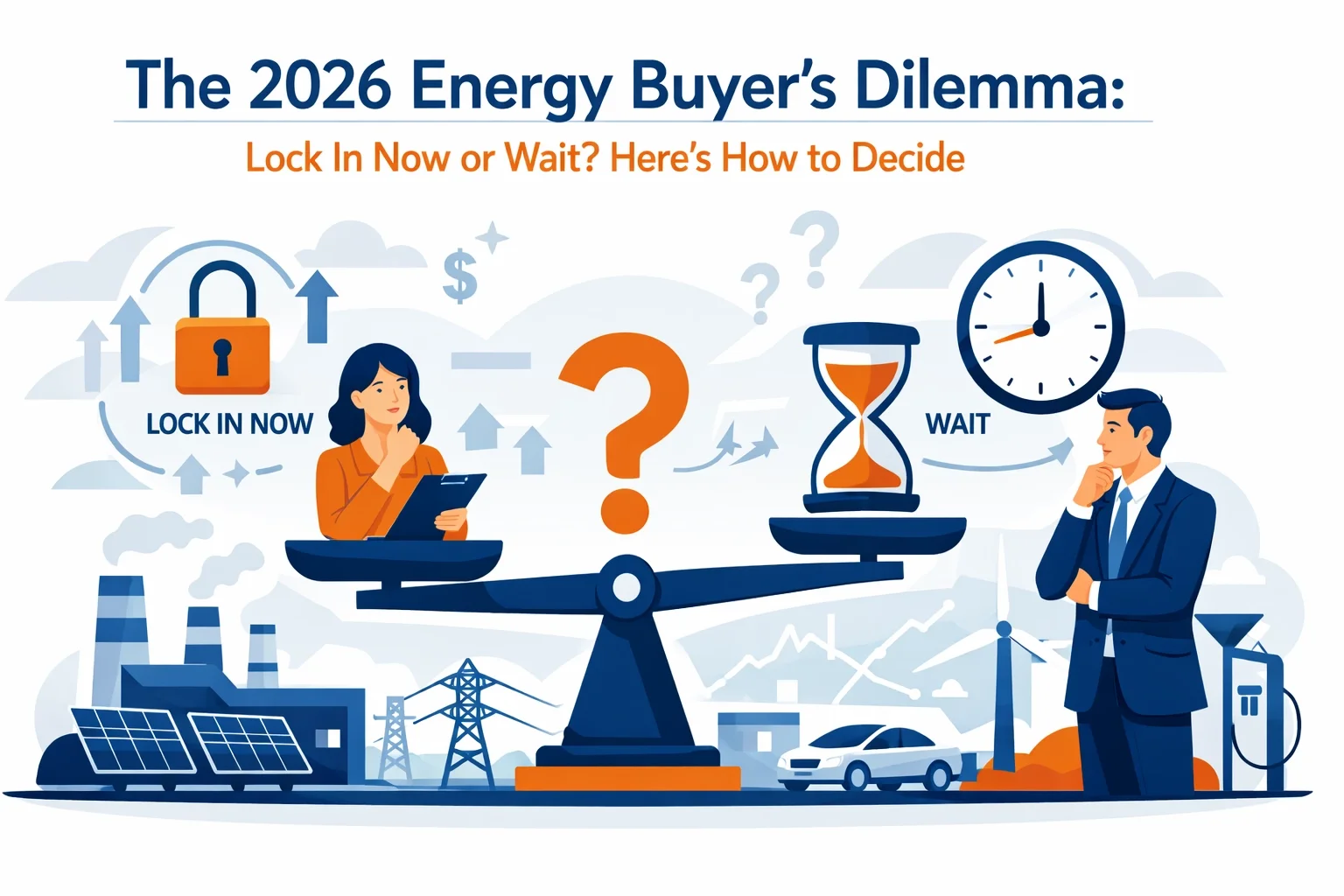
If you're a business owner watching energy markets right now, you're probably asking the same question everyone else is: Should I lock in my energy contract today, or wait for rates to drop?
It's a legitimate dilemma. Lock in too early, and you could miss a market dip. Wait too long, and you might get stuck with rates 20% higher than what's available today.
At United Energy Consultants, we've been helping businesses navigate this exact decision for over 20 years. The truth is, there's no one-size-fits-all answer, but there is a strategic framework you can use to make the right call for your business.
Here's how to decide.
Why Energy Buyers Are Stuck in Decision Paralysis Right Now
Business owners across restaurants, manufacturing, real estate, and other high-usage sectors are facing unprecedented market uncertainty in 2026. You're seeing headlines about volatile natural gas prices, data center energy demand exploding, and renewable energy costs climbing faster than expected.
The result? Decision paralysis.
You don't want to lock in and immediately regret it. But you also don't want to gamble on "waiting for a better rate" and end up paying thousands more per month.
Here's what makes this decision so tough: energy markets don't move in predictable, linear patterns. A single policy shift, weather event, or supply disruption can swing rates 15% in either direction within weeks.
That's why you need to understand both sides of the equation before making a move.

The Case for Locking In Now
Let's start with the argument for securing your rate today. There are three major pressures pushing energy prices upward in 2026, and if you wait, you could be locking in at a much higher rate later.
1. Data Centers and AI Are Driving Demand Through the Roof
The explosive growth of artificial intelligence and data centers is consuming massive amounts of electricity. According to industry forecasts, data center energy demand is outpacing grid infrastructure development by a significant margin.
What this means for you: More competition for the same electricity supply. Even if you're running a restaurant or a manufacturing plant, you're now competing with tech giants for grid capacity, and that's pushing wholesale energy prices higher.
2. Renewable Energy Costs Are Climbing, Not Falling
You might assume that renewable energy is getting cheaper every year. Not in 2026.
Due to phaseouts of federal tax credits, supply chain constraints, and new tariff policies, solar costs are projected to increase by 36% to 55%, and onshore wind by 32% to 63% over the next year. Developers are racing to lock in projects before policy changes take effect, which is tightening available capacity and raising costs.
If your energy contract renews in the next 6–12 months, waiting could mean paying significantly more for the same renewable energy mix.
3. Supply Chain Uncertainty Is Creating Price Volatility
Foreign sourcing rules, international tariffs, and domestic manufacturing bottlenecks are all creating unpredictable cost pressures. Only about 35% of the renewable pipeline is currently under construction, which means supply is lagging behind demand.
The bottom line: If you have budget certainty needs and your business can't absorb 10–20% swings in monthly energy costs, locking in now gives you price stability and predictable cash flow.
The Case for Waiting
Now let's look at the flip side. There are legitimate reasons why waiting a few months might save you money: if the market conditions align.
1. A Major LNG Supply Surge Is Coming
Approximately 29 million metric tons of new liquefied natural gas (LNG) capacity is expected to come online in 2026 from multiple global regions. This influx of supply could ease pricing pressure, especially if demand doesn't spike unexpectedly.
If natural gas prices drop due to oversupply, electricity rates tied to gas-fired generation could follow. For businesses in markets heavily reliant on natural gas for electricity, this could mean lower rates in Q2 or Q3 of 2026.
2. Seasonal Market Dips Are Predictable
Energy demand typically drops during shoulder seasons (spring and fall). If your contract renews in April, May, or September, you might catch a seasonal rate dip that doesn't exist in the summer or winter peak months.
The strategy: If you have flexibility in your renewal timing, you could wait for a non-peak season to lock in lower rates.
3. Grid Infrastructure Modernization Could Stabilize Pricing
As utilities invest in grid upgrades to handle data center expansion and renewable integration, pricing volatility may decrease over time. If you can afford to ride out short-term spikes, waiting for the grid to catch up to demand could pay off.
The risk: This is a long-term bet. Grid modernization takes years, not months. If you're waiting for this factor alone, you could be waiting a very long time.

What Makes This Decision Even Harder in 2026
Unlike previous years, 2026 presents a unique combination of upward and downward pressures that make the "lock in vs. wait" decision more complex than ever.
On one hand, you have demand-side growth (data centers, AI, electrification of heating/cooling) pushing prices up. On the other hand, you have supply-side surges (LNG, utility-scale solar, offshore wind projects coming online) that could push prices down.
The market is essentially at a tipping point: and which way it tips depends on factors outside your control: regulatory changes, weather patterns, international trade policies, and macroeconomic trends.
This is exactly why independent expertise matters.
How to Decide What's Right for YOUR Business
Here's the framework we use at United Energy Consultants to help businesses make this decision strategically, not emotionally.
Step 1: Understand Your Risk Tolerance
Ask yourself: Can your business absorb a 15–20% increase in energy costs if rates spike?
If NO: Lock in now. Price stability and budget certainty are more valuable to your business than chasing a potential 3–5% savings.
If YES: You have the flexibility to wait and potentially capture a market dip.
Step 2: Analyze Your Usage Profile
Your energy consumption pattern matters. Businesses with high peak demand (restaurants, cold storage, manufacturing) are more exposed to capacity charge increases. If your demand charges are climbing, locking in a fixed rate can cap that exposure.
Our Energy Tracker Pro software analyzes your historical usage data to show you exactly where your cost vulnerabilities are: so you're not making decisions based on guesses.
Step 3: Know Your Contract Renewal Date
If your contract expires in a peak season (July–August or December–January), you're more likely to face higher rates. If you're renewing in a shoulder season, you may have more room to negotiate.
Step 4: Get Multiple Quotes from Independent Suppliers
This is where United Energy Consultants makes the biggest difference. We're not tied to any single supplier. With over 80 supplier contacts and 20+ years of market experience, we can show you what rates are available today: and forecast where they're likely to go based on current market conditions.
Zero out-of-pocket cost. No supplier bias. Just honest analysis.

The Smartest Move: Get Expert Analysis Before You Decide
You don't have to make this decision alone. The biggest mistake we see business owners make is either locking in blindly because they're scared of volatility, or waiting indefinitely because they're hoping for a miracle rate drop.
Both strategies can backfire.
The smarter approach: Get a free bill analysis from an independent energy consultant who can show you:
✅ What fixed rates are available for your business today
✅ What market trends suggest about pricing over the next 6–12 months
✅ How your usage profile affects your exposure to rate volatility
✅ Whether locking in now or waiting makes more financial sense for YOUR specific situation
At United Energy Consultants, we've helped thousands of businesses across New York, New Jersey, and beyond make this exact decision. Our Energy Tracker Pro software gives you real-time visibility into your energy spending, contract renewal dates, and market opportunities: so you're never caught off guard.
Your Next Step
Stop guessing. Start strategizing.
Send us a copy of your most recent energy bill. We'll run a free analysis and show you exactly what your options are: no pressure, no sales pitch, just honest data.
Whether you lock in today or wait six months, you'll make that decision based on facts, not fear.
United Energy Consultants
20+ Years of Experience. Independent. Zero Out-of-Pocket Cost.
www.uecnow.com
Let's figure out your best move together.