
Post-Grid Crisis: How Commercial Real Estate Owners Are Protecting Portfolio Value in Summer 2026

Two weeks ago, the grid nearly broke. The July 4th, 2026 heat wave wasn’t just a record-breaker for the thermometer—it was a wake-up call for every commercial real estate (CRE) owner in the PJM territory and beyond. As temperatures soared, so did the strain on aging infrastructure, sending wholesale prices into a frenzy and leaving property managers wondering how much of their Net Operating Income (NOI) evaporated in the summer heat.
If you are managing a portfolio of commercial assets, you already know that energy is no longer a "set it and forget it" line item. With PJM capacity prices skyrocketing to $329/MW-day and recent 20% rate hikes hitting many deregulated states, the cost of doing nothing is higher than ever.
At United Energy Consultants (UEC), we’ve spent over 20 years helping real estate companies navigate these exact market conditions. Protecting portfolio value now requires more than efficient light bulbs—it requires a strategic, data-driven defense.
The "Silent Surge": Why Your 2026 Utility Bills Are Different
The current crisis isn’t just about how much electricity you use—it’s about when you use it and how the market "insures" that power. The PJM capacity auction for the 2026-2027 delivery year cleared at $329.17 per MW-day—a massive jump that represents the maximum price allowed under the current market rules.
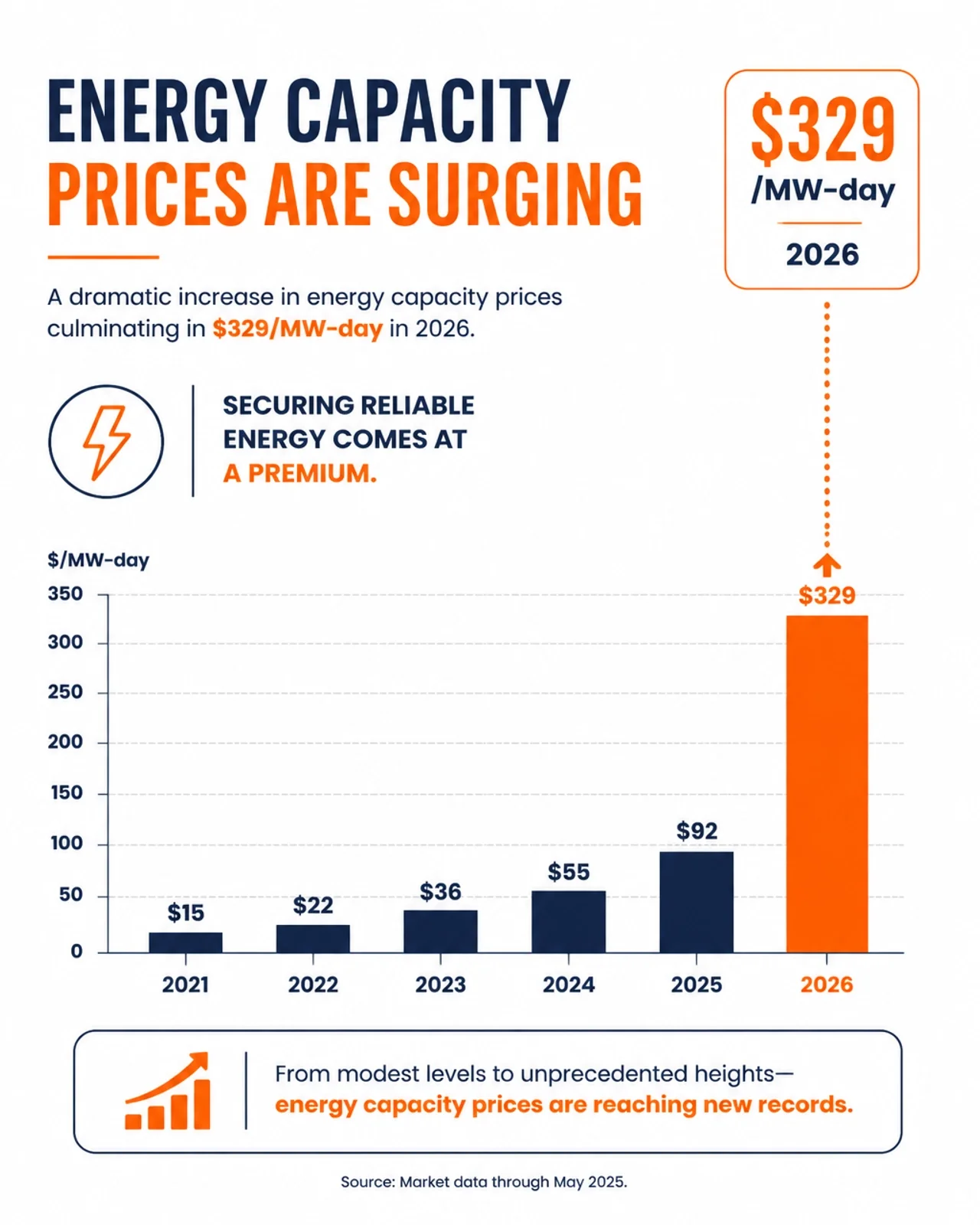
For your business, this means the "capacity" portion of your bill—the fee you pay just for the grid to be ready for your peak demand—is no longer a minor detail. It can now account for 25% to 35% of your total electricity spend. If your buildings hit their peak usage during those blistering July 4th afternoon hours, you’ve likely set a "Peak Load Contribution" (PLC) that will haunt your bills for the next year.
Reducing energy costs for real estate companies in this environment isn't optional—it’s a fundamental requirement for maintaining asset valuation.
Strategy 1: Turning Liability into Revenue with Demand Response
During the recent grid crisis, the most successful CRE owners weren't just saving money—they were getting paid. Demand Response (DR) programs allow you to voluntarily reduce your building’s power load during times of extreme grid stress.
When the grid is on the verge of a brownout, the utility will pay you to "shed load"—perhaps by dimming non-essential lighting or slightly adjusting HVAC setpoints in common areas. In the volatile market of Summer 2026, these payments have become a critical revenue stream that offsets rising capacity charges.
You can learn more about how to enroll in demand response programs to turn your buildings into active grid participants.
Strategy 2: Submetering and Passing Through Capacity Costs
In a multi-tenant environment, the "Master Meter" is a relic of a cheaper era. If you are operating under gross leases or poorly defined expense stops, you are likely eating the cost of your tenants’ inefficient energy habits.
Submetering is the ultimate tool for fairness and NOI protection. By installing granular meters at the tenant or floor level, you can:
Identify Waste: Pinpoint exactly which tenants are running high-intensity equipment during peak hours.
Allocate Costs: Directly pass through the actual energy and capacity costs to the users responsible for them.
Incentivize Efficiency: When tenants see the direct correlation between their behavior and their bill, they are more likely to participate in building-wide efficiency goals.
Passing through the silent surge of capacity rate hikes ensures that your bottom line stays insulated from market volatility.
Strategy 3: Benchmarking as Your Secret Valuation Weapon
If you want to sell, refinance, or simply attract high-quality tenants in 2026, your ENERGY STAR score is just as important as your occupancy rate. Benchmarking isn't just a regulatory hurdle—it’s a secret weapon for asset managers.
By comparing your buildings against similar assets in your region, you can identify the "low-hanging fruit" for efficiency upgrades. High-performing, ENERGY STAR-certified buildings often command higher rents and see higher tenant retention because they offer lower total occupancy costs.
In fact, our data shows that benchmarking can be your secret weapon in the competitive Tri-State market, sometimes even unlocking specialized incentives and rebates that pay you back for your efficiency.
Leveraging Energy Tracker Pro for Multi-Property Visibility
Managing one building is hard. Managing a portfolio of 20, 50, or 100 properties during an energy crisis is impossible without the right software. This is why we developed Energy Tracker Pro.
Our proprietary platform provides a "single pane of glass" view into your entire portfolio’s energy performance. You don't have to wait 30 days for a utility bill to see the damage from a heat wave—you can see real-time data, track your demand peaks, and identify billing errors before they hit your bank account.
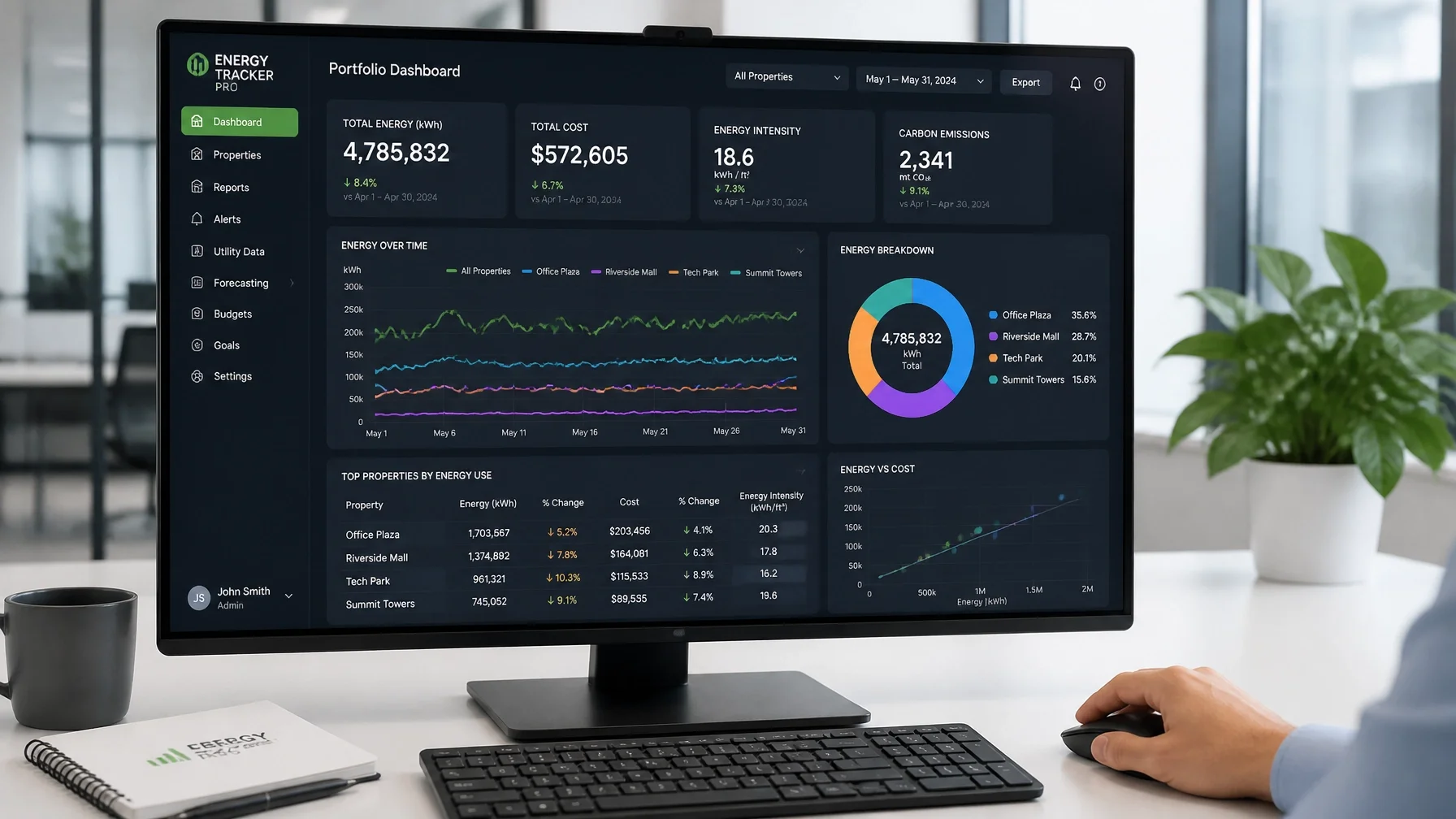
With Energy Tracker Pro, you can:
Compare Properties: See which buildings are outliers in energy intensity.
Verify Savings: Track the ROI of your LED retrofits or HVAC upgrades in real-time.
Simplify Reporting: Generate one-click reports for investors or regulatory compliance.
Why an Independent Guide Matters in 2026
The deregulated energy market is more complex than it has ever been. Suppliers are facing their own risks, and their "fixed-rate" offers often include hidden clauses that allow them to pass through new regulatory costs.
As an independent energy consulting company, United Energy Consultants works only for you. We have no supplier affiliations. Our goal is simple—to secure the best wholesale rates and create a custom buying strategy based on your specific usage data.
Whether you are in New York, New Jersey, or any other deregulated state, we bring over 20 years of expertise and 80+ supplier relationships to the table—all with zero out-of-pocket costs to our clients.
Take Action Before the Next Peak
The July 4th heat wave was a warning shot. The rest of Summer 2026—and the budget cycle for 2027—will be defined by how you respond to these rising costs.
Don't let your portfolio value be eroded by a grid you can't control. Take control of your data, manage your demand, and put a plan in place before the next pricing spike hits.
Ready to protect your portfolio? Contact United Energy Consultants today to schedule a comprehensive energy audit and a live demo of Energy Tracker Pro. The next peak event will not wait—now is the time to tighten procurement strategy, uncover avoidable costs, and protect NOI with a more proactive energy plan.