
It’s Tuesday, April 21, 2026, and if you’re looking out the window here in the Tri-State, you’re probably enjoying the "Great Thaw." The winter chill is finally behind us, and for business owners, there’s even better news on the surface: natural gas prices are sitting at some of their lowest levels in years. I’ve been calling this the "Goldilocks Zone": that sweet spot in April and May where the market settles, the heating demand vanishes, and the cooling demand hasn't quite kicked in yet.
But I’m going to be straight with you: there is a monster under the bed.
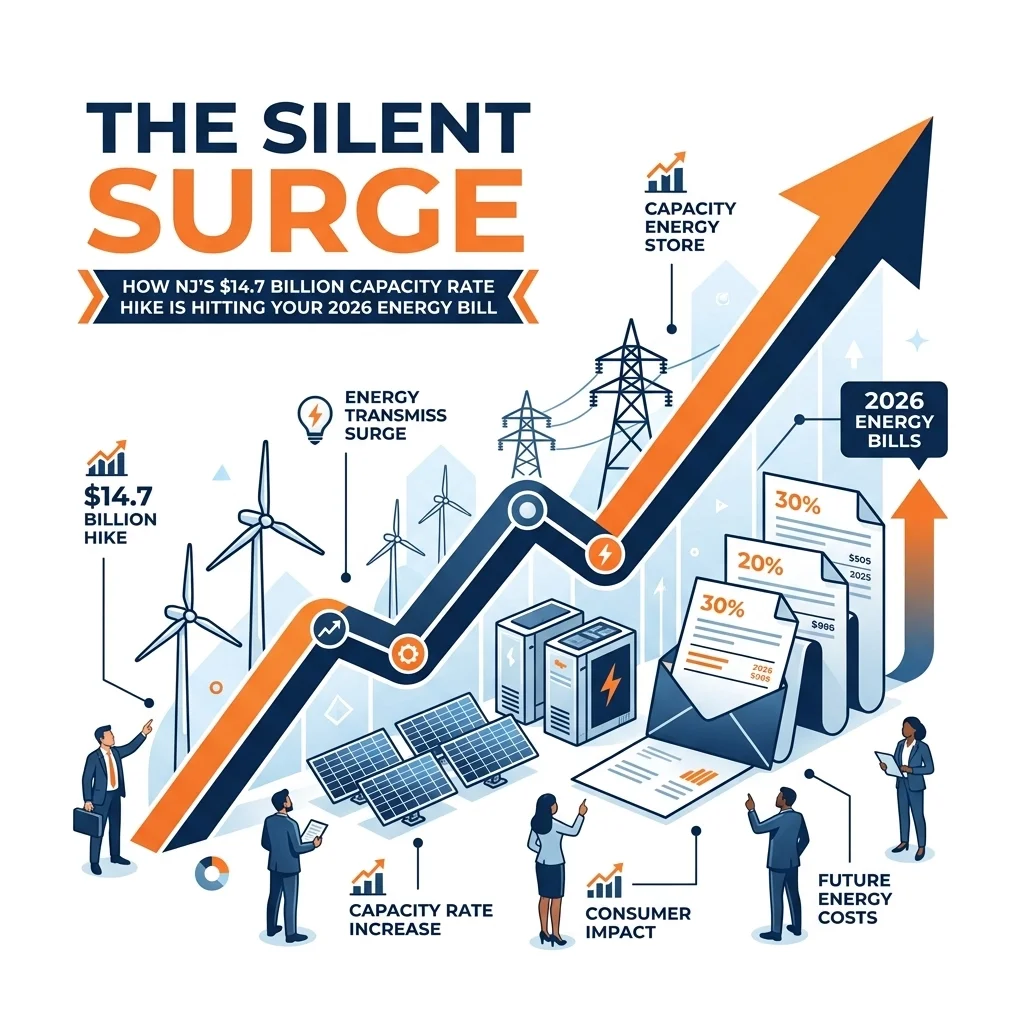
While the "supply" portion of your bill looks great right now, there is a silent surge coming that most businesses aren't prepared for. I'm talking about the $14.7 billion capacity cost jump in the PJM Interconnection (the power grid that serves New Jersey and the surrounding states).
If you own a manufacturing plant or manage a real estate portfolio, your 2026 energy bill is about to look very different. Let’s break down what’s actually happening and how you can protect your bottom line before the 2026-2027 winter spike hits.
Capacity Charges Explained: The "Silent Killer" of Your Energy Bill
Most business owners I talk to focus on one number: the price per kilowatt-hour (kWh). It makes sense. That’s the "supply" rate. But in deregulated energy states, your bill is actually split. One of the biggest pieces of that pie: and the most misunderstood: is Capacity.
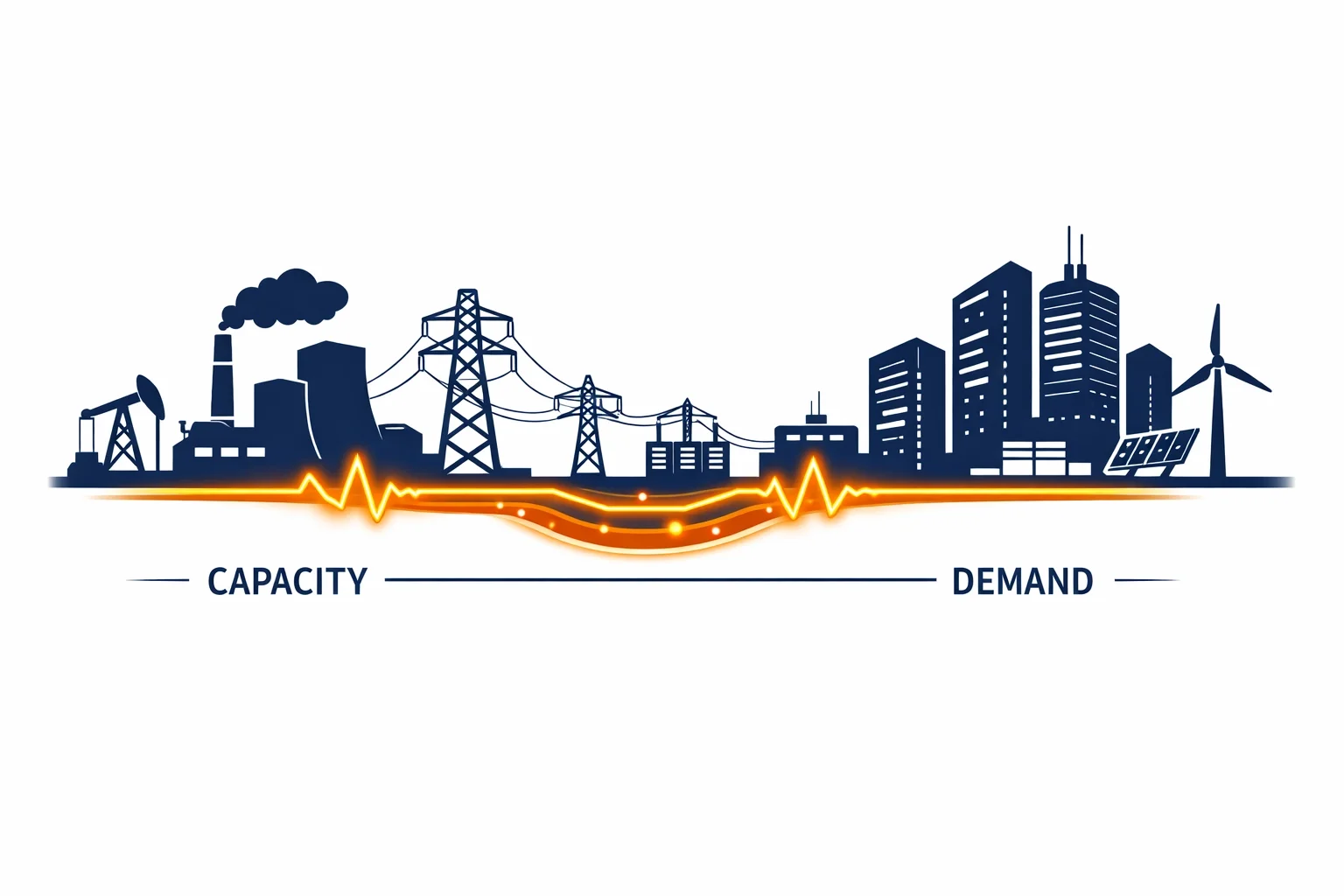
Think of capacity as a "reservation fee" for the power grid. You aren't paying for the electricity you use; you’re paying to ensure that the grid has enough power available to meet the absolute maximum demand of the entire region at any given second.
In the recent PJM capacity auction, the total cost to ensure grid reliability skyrocketed from $2.2 billion to a staggering $14.7 billion. This is the highest capacity price in the history of the auction.
Why the jump? It’s a perfect storm. We have old power plants retiring faster than new ones can be built, and at the same time, the data center boom is jacking up energy demand across the region. When supply goes down and demand goes up, the price of "reliability" goes through the roof.
It’s Tuesday, April 21, 2026, and if you’re looking out the window here in the Tri-State, you’re probably enjoying the "Great Thaw." The winter chill is finally behind us, and for business owners, there’s even better news on the surface: natural gas prices are sitting at some of their lowest levels in years. I’ve been calling this the "Goldilocks Zone": that sweet spot in April and May where the market settles, the heating demand vanishes, and the cooling demand hasn't quite kicked in yet.
But I’m going to be straight with you: there is a monster under the bed.
While the "supply" portion of your bill looks great right now, there is a silent surge coming that most businesses aren't prepared for. I'm talking about the $14.7 billion capacity cost jump in the PJM Interconnection (the power grid that serves New Jersey and the surrounding states).
If you own a manufacturing plant or manage a real estate portfolio, your 2026 energy bill is about to look very different. Let’s break down what’s actually happening and how you can protect your bottom line before the 2026-2027 winter spike hits.
Capacity Charges Explained: The "Silent Killer" of Your Energy Bill
Most business owners I talk to focus on one number: the price per kilowatt-hour (kWh). It makes sense. That’s the "supply" rate. But in deregulated energy states, your bill is actually split. One of the biggest pieces of that pie: and the most misunderstood: is Capacity.
Think of capacity as a "reservation fee" for the power grid. You aren't paying for the electricity you use; you’re paying to ensure that the grid has enough power available to meet the absolute maximum demand of the entire region at any given second.
In the recent PJM capacity auction, the total cost to ensure grid reliability skyrocketed from $2.2 billion to a staggering $14.7 billion. This is the highest capacity price in the history of the auction.
Why the jump? It’s a perfect storm. We have old power plants retiring faster than new ones can be built, and at the same time, the data center boom is jacking up energy demand across the region. When supply goes down and demand goes up, the price of "reliability" goes through the roof.
Why "Independent" Matters
When you’re navigating a $14.7 billion market shift, you don't want to talk to a salesman who only represents one company. You need a broker.
United Energy Consultants is an independent firm. We have over 20 years of experience and relationships with more than 80 different suppliers. We don't work for the utility, and we don't work for the energy companies. We work for you.
The best part? Our services come with zero out-of-pocket costs to your business. We get paid by the suppliers to bring them high-quality, long-term clients, which means our interests are perfectly aligned with yours: finding the lowest possible total cost for your energy.
Your 2026 Strategy: Don't Get Ghosted by Your Rate
The "Silent Surge" is already baked into the market. If you haven't reviewed your energy contract in the last six months, you are likely exposed to these capacity hikes.
Here is my advice:
Audit your current "riders": Look at your bill. Are you paying a fixed price that includes capacity, or is it being passed through?
Leverage the "Great Thaw": Use the low gas prices of April 2026 to lock in a long-term supply rate.
Explore Grants: See if your facility qualifies for the RETROFIT NJ program to lower your load.
Monitor the Data: Use Energy Tracker Pro to stay ahead of the next auction.
The energy market in 2026 is complex, but it doesn't have to be a drain on your business. Whether you are navigating the New York market or dealing with the NJ capacity spike, having an expert in your corner makes all the difference.

Ready to see how the $14.7B hike affects your specific bottom line?
Let’s run the numbers. At United Energy Consultants, we’ll provide a full, no-obligation analysis of your current energy spend and show you exactly where the "silent killers" are hiding in your bill.
Stop guessing and start managing your energy with the same precision you manage the rest of your business. Reach out to us today, and let’s get you locked in before the "Goldilocks Zone" closes for the year.