
Natural Gas Prices Just Jumped 27%: What This Means for Your Business Energy Bills
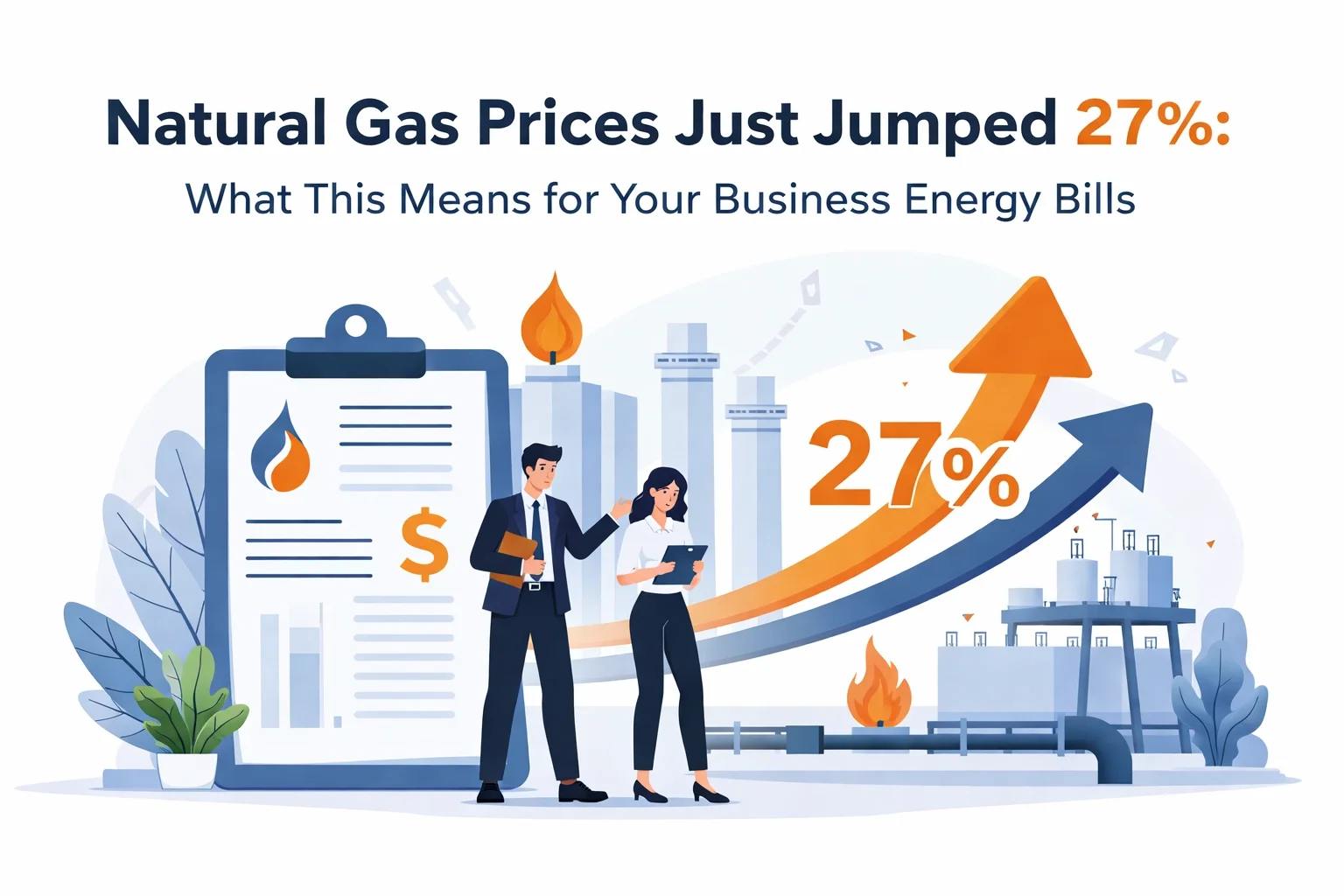
If you woke up this week and felt like something shifted in the energy market, you're not imagining things. Natural gas prices surged 28% on January 27, 2026, settling at $6.78 per million British thermal units (MMBtu): one of the largest single-day gains in history. Just weeks ago, prices were hovering around $2.62.
That's not a typo. We're talking about a near-tripling of wholesale energy rates in a matter of weeks.
For business owners and facility managers, this isn't just headline news. It's a wake-up call. Let's break down what happened, why it matters to your bottom line, and: most importantly: what you can do about it.
What's Behind This Massive Price Spike?
The short answer: Winter Storm Fern.
Arctic temperatures: 20 to 30 degrees below seasonal norms: swept across major gas-producing regions in the U.S., triggering widespread "freeze-offs" at production facilities. Within just 72 hours, approximately 11-12% of total U.S. natural gas production (nearly 15 billion cubic feet per day) went offline.
When supply drops that fast and demand stays sky-high, prices explode.
But that's not the whole story. Traders who had bet on a mild winter found themselves scrambling to cover their positions. This created a short squeeze that amplified the upward momentum even further. The weekly price increase reached approximately 70-96%: the strongest advance in more than three decades.
And if you're wondering about Europe? Colder-than-expected temperatures there are adding global pressure to an already strained market.

Why Natural Gas Prices Affect Your Electricity Bill
Here's something many business owners don't realize: natural gas and electricity prices are deeply connected.
In most U.S. markets, natural gas is the primary fuel source for power generation. When natural gas prices spike, electricity rates follow: sometimes within days, depending on your contract structure.
If you're on an indexed or variable-rate contract, you're likely already feeling the pinch. Your next bill could look dramatically different from last month's.
If you're on a fixed-rate contract, you might be breathing a sigh of relief right now. But here's the catch: if your contract is up for renewal in the next few months, you'll be negotiating in a very different market environment.
The bottom line? Wholesale energy rates directly impact your business energy costs, whether you see it immediately or down the road.
The Real Risk: Playing the "Wait and See" Game
Let's be honest: most businesses take a reactive approach to energy management. The bill arrives, someone pays it, and life goes on. Maybe you renegotiate when the contract expires. Maybe you don't.
That strategy worked fine when markets were stable. But we're not in stable times anymore.
Consider this:
Natural gas storage could end this heating season below 25% capacity: a level not seen in nearly four years. That eliminates the market's primary buffer against price volatility.
Extreme cold is expected to persist for approximately two weeks, creating sustained heavy demand.
If production can't grow by at least 4 billion cubic feet per day, further price increases are possible through winter 2026 and into 2027.
Waiting for the dust to settle means you're exposed. And in a volatile market, exposure can cost you thousands: or tens of thousands: depending on the size of your operation.
Who's Feeling This the Most?
Not all businesses are impacted equally. Here's a quick rundown:
Restaurants and Hospitality
High gas usage for cooking, heating, and hot water means restaurants and hotels are particularly vulnerable. A 20-30% increase in utility costs can devastate already-thin margins.
If you're in this space, check out our guide on how hotels can cut energy costs without affecting guest experience.
Manufacturing and Industrial Facilities
Industrial users: especially chemical manufacturers and fertilizer producers: face immediate "margin squeezes." Some facilities may need to consider temporary shutdowns if prices remain elevated through February.
Data Centers
These facilities run 24/7 and consume massive amounts of electricity. With electricity rates tied to natural gas, data center operators need to be proactive about their energy buying strategies.
We recently covered how data centers and cannabis companies are handling the energy cost crisis differently: worth a read if you're in either space.
Commercial Real Estate
Property managers juggling multiple buildings face a compounding effect. Higher utility costs hit NOI (Net Operating Income) directly, which can impact property valuations and tenant relationships.
What You Can Actually Do About It
Here's where we get practical. You can't control the weather or global energy markets. But you can control your strategy.
1. Know Your Contract Inside and Out
When does your current energy contract expire? What's your rate structure: fixed, indexed, or blended? Are there any renewal clauses that kick in automatically?
If you don't know the answers to these questions, that's problem number one.
2. Explore Custom Buying Strategies
There's no one-size-fits-all approach to energy procurement. Depending on your risk tolerance, usage patterns, and contract timing, you might benefit from:
Locking in fixed rates before prices climb higher
Using indexed contracts strategically during periods of expected price drops
Layering purchases over time to average out market volatility
The key is having a strategy that matches your business: not just signing whatever your supplier puts in front of you.
3. Monitor Usage and Costs in Real Time
You can't manage what you can't measure. That's why we built Energy Tracker Pro, our proprietary software that gives you real-time visibility into your energy usage and costs across all your facilities.
When the market moves this fast, waiting for a monthly bill to understand your exposure is too slow. You need data at your fingertips.

4. Work with an Independent Consultant
Here's the thing about energy suppliers: they're not working for you. They're working for their shareholders. Their job is to sell you energy at a price that maximizes their profit.
An independent energy consultant works differently. We don't represent any supplier. We represent you.
At United Energy Consultants, we've been doing this for over 20 years. We have relationships with 80+ suppliers, which means we can shop the market on your behalf and find the best deal for your specific situation.
And here's the best part: our services come at zero out-of-pocket cost to you. We're compensated by the suppliers we work with, so you get expert guidance without adding to your budget.
The Bottom Line
A 28% single-day spike in natural gas prices isn't normal. Neither is the 70-96% weekly increase we just witnessed. Markets like this separate businesses that plan ahead from businesses that react too late.
If you're a business owner or facility manager, now is the time to:
Review your current energy contracts
Understand your exposure to wholesale energy rate fluctuations
Develop a proactive strategy to reduce energy costs
You don't have to navigate this alone. Whether you're running a restaurant, managing a data center, or overseeing a portfolio of commercial properties, we can help you build an energy buying strategy that protects your bottom line.
Ready to take control of your energy costs? Reach out to United Energy Consultants and let's talk about what's possible for your business.