
The Great Energy Thaw: Why April is the ‘Goldilocks Zone’ for Your 2026 Business Energy Contract
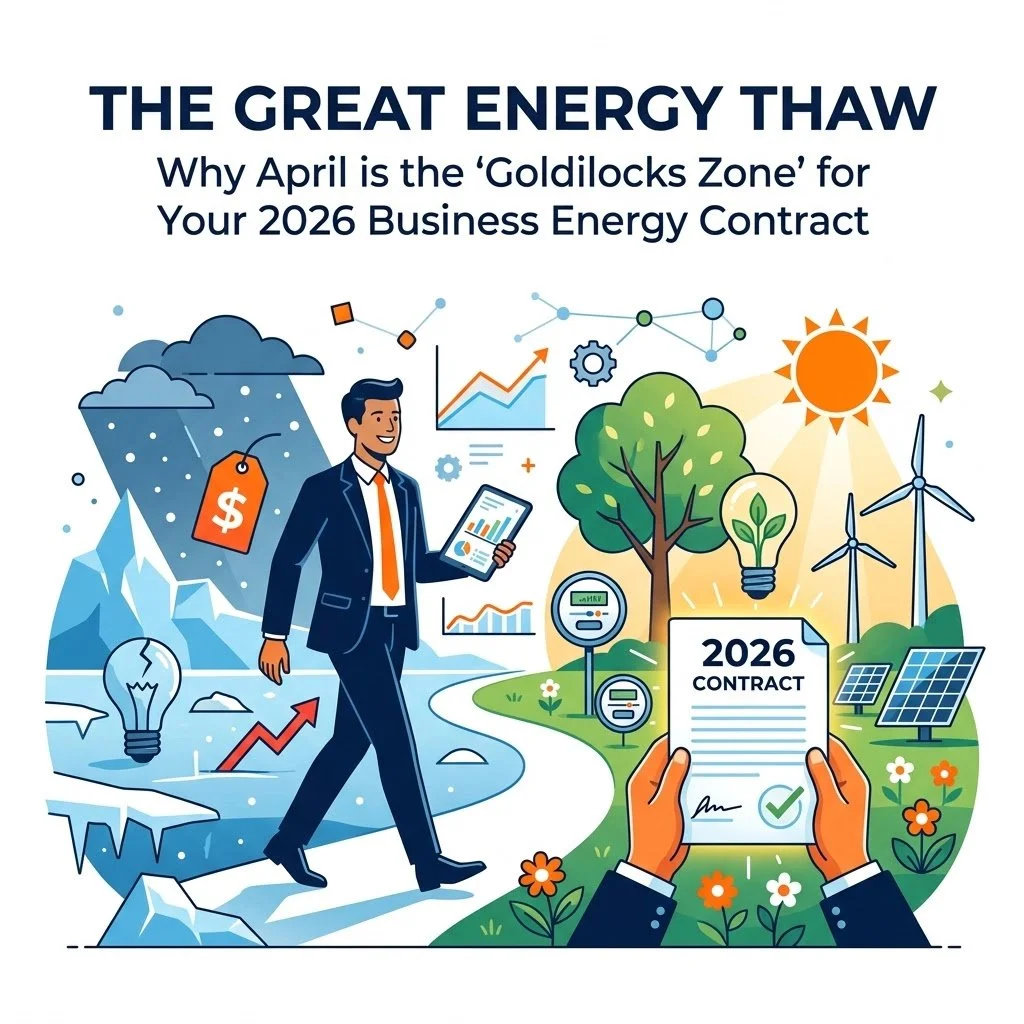
To say the first quarter of 2026 was a rollercoaster for energy buyers would be a significant understatement. Between the supply chain constraints and the lingering impact of Winter Storm Fern, which sent Henry Hub spot prices soaring to historic highs in late January, many business owners were left bracing for a year of budget-breaking utility bills.
However, as we move into mid-April, the narrative has shifted dramatically. We are currently witnessing what market analysts are calling "The Great Energy Thaw." Natural gas prices have plummeted 52% from those January peaks, with the Henry Hub benchmark settling into a much more palatable range around $2.82/MMBtu.
For commercial enterprises, this isn't just a news headline: it is a strategic window. April and May represent the "shoulder month" sweet spot, a period where mild temperatures lead to low demand, creating the perfect environment to hedge against future volatility. If you haven't reviewed your energy procurement strategy since the ball dropped on New Year’s Eve, now is the time to act.
The Market Correction: Understanding the 52% Decline
The extreme volatility seen earlier this year was largely driven by speculative fear and localized supply shortages during peak heating months. As domestic production recovered to record levels of over 111 Bcf/d and storage inventories remained healthy through the end of the winter, the "risk premium" baked into prices evaporated.

This correction is good news for anyone managing business energy costs in NJ and other deregulated markets. When natural gas prices drop, electricity rates typically follow suit, as gas remains the primary fuel source for power generation in the Northeast. This decline offers a rare opportunity to lock in wholesale energy rates for manufacturers and other high-volume users who missed the chance to secure contracts during the previous autumn.
Why April and May Are the 'Goldilocks Zone'
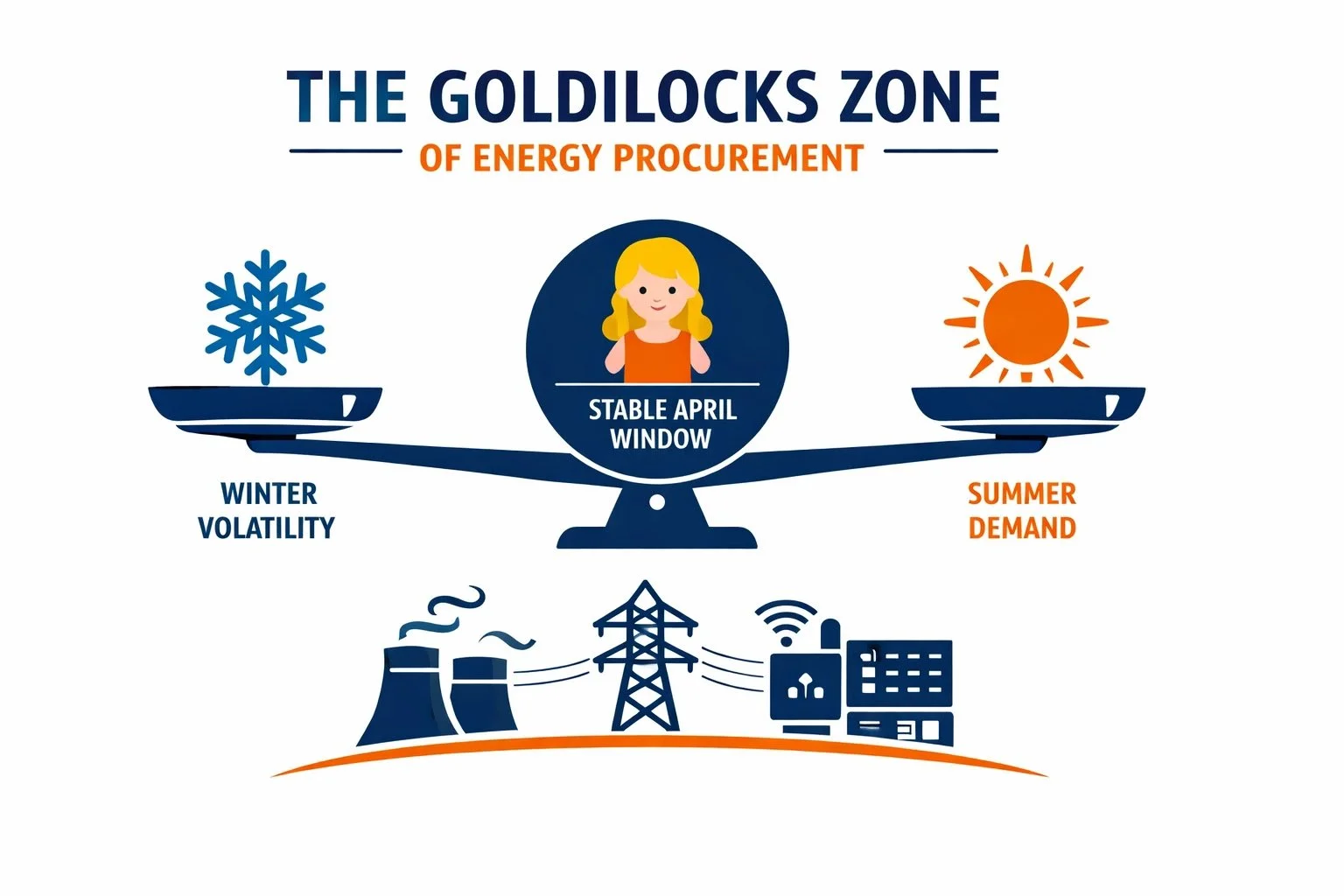
In the energy world, we refer to spring and autumn as "shoulder months." During these windows, the demand for heating has subsided, but the heavy load from air conditioning has not yet hit the grid. This lack of demand usually results in the lowest spot prices of the year.
However, the "Goldilocks Zone" of April 2026 is unique because it combines this seasonal dip with a massive post-volatility market correction. For businesses, this means:
Lower Capacity Tags: Decisions made now can impact your capacity charges for the following year.
Reduced Risk Premiums: Suppliers are more willing to offer competitive fixed rates when the spot market is stable.
Strategic Planning: Locking in a rate now protects your Q3 and Q4 budgets from the inevitable summer "cooling" spikes and next winter’s uncertainty.
United Energy Consultants specializes in these deregulated energy states energy buying strategies, helping businesses identify these exact moments to pivot from variable to fixed pricing.
Sector-Specific Strategies: Who Wins in the Thaw?
Different industries face different energy pressures. Here is how your specific sector should be approaching this market correction:
1. New Jersey Restaurants & Hospitality
For those looking for competitive electricity rates for restaurants, the current market thaw is a lifeline. Operating on thin margins means that a 20% swing in utility costs can be the difference between profit and loss. By securing a contract during the April dip, restaurant owners can stabilize their overhead for the busy summer season.
Related Reading: The truth about mini battery programs for NY restaurants
2. Real Estate & Property Management
Large-scale property owners are often the most exposed to market shifts. Reducing energy costs for real estate companies requires a proactive approach to contract expirations. If your current agreement expires anytime in the next 12 months, the "Great Thaw" provides a pricing floor that likely won't last once the summer heat sets in.
3. Data Centers & Manufacturing
High-load facilities require more than just a low rate; they need sophisticated data center energy management strategies. With the rapid expansion of AI and cloud computing, data centers are consuming a larger share of the grid’s capacity. Manufacturers, similarly, rely on consistent wholesale energy rates for manufacturers to keep production costs predictable. For these sectors, a multi-year hedge starting in this April window can save hundreds of thousands of dollars in "price-to-compare" fluctuations.
Leveraging Technology: The Energy Tracker Pro Advantage
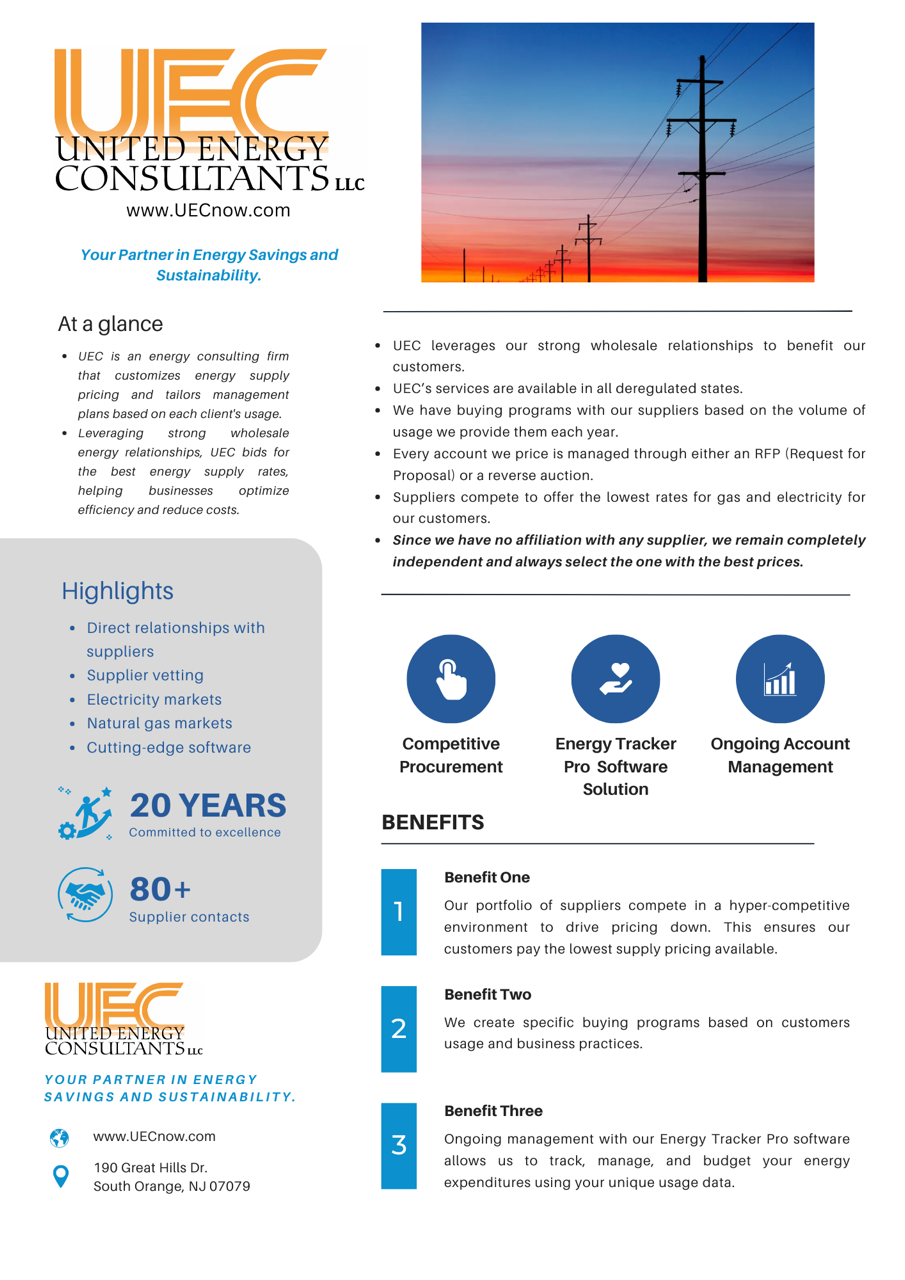
Navigating the complexities of the energy market shouldn't be a manual task. This is where United Energy Consultants differentiates itself. While many brokers simply offer a "price of the day," we provide our clients with Energy Tracker Pro.
This proprietary software allows businesses to monitor their usage in real-time and compare it against market trends. For a hotel manager using hotel utility management software, Energy Tracker Pro acts as the missing link between operational efficiency and procurement strategy. It allows you to see exactly when and where your energy is being consumed, ensuring that the low rates you lock in during the "Goldilocks Zone" are maximized through efficient usage.
The Risks of Waiting: The Summer Pivot
The danger of a 52% price drop is that it can lull business owners into a sense of complacency. It is tempting to think, "If prices dropped this much, maybe they'll go lower."
Historically, this is a risky gamble. As we move into June and July, the "cooling load" begins to stress the grid. If 2026 sees a hotter-than-average summer, those $2.82/MMBtu prices will be a distant memory. Furthermore, as more industries shift toward electrification, the baseline demand for power is rising every year.
By acting now, you are not just buying energy; you are buying insurance against the next market spike. Our team at United Energy Consultants helps you navigate these shifts with zero out-of-pocket costs. We earn our keep by finding you the best possible deal among over 80 vetted suppliers, ensuring that your business stays competitive regardless of what the weather does.
Navigating Deregulated Markets with Confidence
The power of choice is only valuable if you have the data to make the right decision. Whether you are managing a single NJ boutique or a multi-state manufacturing footprint, understanding deregulated energy states energy buying strategies is essential for long-term fiscal health.
At United Energy Consultants, we bring 20 years of experience to the table. We’ve seen the highs of Winter Storm Fern and the lows of the 2026 Great Thaw. Our goal is to ensure that our clients never get caught on the wrong side of a price swing.
Key Takeaways for April 2026:
Lock in Fixed Rates: With natural gas at a 52% discount from January, the risk of a price floor is higher than the risk of further significant drops.
Audit Your Usage: Use this quiet period to implement hotel utility management software or similar tools to identify waste.
Consult an Expert: Procurement isn't just about the lowest number on a spreadsheet; it’s about contract terms, bandwidth clauses, and regulatory compliance.
Ready to Secure Your Rate?
The "Goldilocks Zone" won't stay open forever. As the mercury rises, so will the cost of securing your 2026 and 2027 energy needs. United Energy Consultants is here to help you capitalize on the "Great Thaw" before the market heats up again.
From providing the latest energy trends 2026 to deep-diving into how fixed-price contracts matter for stability, our blog and our consultants are your primary resource for energy intelligence.
Contact United Energy Consultants today for a free analysis of your current energy spend and see how much the Great Thaw can save your business.