
If you’re running a restaurant in April 2026, you already know the drill. You’re juggling rising food costs, a tight labor market, and customers who are increasingly picky about where they spend their dining dollars. But there’s a silent killer on your P&L statement that most owners are either ignoring or mishandling: your energy bill.
In the Tri-State area: and especially in New Jersey: electricity rates for restaurants have become a volatile beast. Between the massive expansion of data centers drawing power from the grid and the transition to renewable energy, the "old way" of managing utilities just doesn't cut it anymore.
My name is Peter Kaplan, and at United Energy Consultants, we’ve spent two decades helping business owners navigate these shark-infested waters. We see the same blunders week after week. If you want to stop bleeding cash, you need to stop making these seven common mistakes with your energy contracts.
1. Falling for the "Teaser Rate" Trap
We see it all the time. A supplier calls you up with a rate that looks significantly lower than what you’re paying now. It sounds like a no-brainer, right? You sign the dotted line, and for three months, life is good. Then, Month 4 hits, and suddenly your rate triples because you were moved to a variable "market" rate or hidden "pass-through" charges kicked in.
In deregulated energy states, energy buying strategies must be focused on the total cost of ownership, not just the headline number. Many restaurants get lured by "introductory" rates that don't account for capacity charges or transmission fees.
The Fix: Always look for a fixed-all-inclusive rate. If a deal looks too good to be true, it probably is. You need a partner who can vet the fine print for you. You can learn more about how to switch smarter, not harder to avoid these predatory tactics.
2. Ignoring the "Data Center Effect" on the Grid
You might wonder why business energy costs in NJ are spiking even when your usage stays the same. The answer lies in the massive growth of data centers. These facilities are popping up all over the Northeast, consuming vast amounts of power 24/7.
When a new data center goes live, it tightens the supply for everyone else. While big tech firms have sophisticated data center energy management strategies to mitigate their costs, the average restaurant owner is left holding the bag for the increased demand on the grid. This "demand squeeze" is a primary reason why wholesale prices are becoming more unpredictable.

3. Not Timing Your Contract Renewal Correctly
Energy is a commodity, just like the beef or seafood you buy for your kitchen. Prices fluctuate based on the season. If your contract expires in the middle of a heatwave in July or a polar vortex in January, you’re going to pay a premium.
Right now, it’s April 2026. We call this the "Goldilocks Zone." The weather is mild, heating demand is down, and cooling demand hasn't peaked yet. This is historically one of the best times to lock in a long-term rate. If you wait until June to think about your energy bill, you’ve already lost. We actually did a deep dive into why April is the perfect time for your 2026 contract.
The Fix: Don’t wait for your contract to expire. You can often "blend and extend" or lock in a forward-start contract 6–12 months before your current one ends to capture low market prices.
4. Failing to Manage Peak Demand
Most restaurant owners look at their total kWh usage, but they ignore their Peak Demand. Your utility company doesn’t just charge you for how much energy you use; they charge you for the maximum amount of energy you require at any single moment.
If your kitchen staff turns on the walk-in freezers, the ovens, the fryers, and the HVAC all at 10:00 AM, you create a massive spike in demand. That one 15-minute spike can set your "demand charge" for the entire month.
The Fix: Stagger your equipment startup. By spreading out when heavy machinery is powered on, you can flatten your demand curve and significantly lower your bill. For larger operations, participating in demand response programs can actually turn your usage into a source of revenue.
5. Underestimating the "Power of Choice"
We still meet restaurant owners in New Jersey who think they have to buy their power from PSE&G or JCP&L. While the utility delivers the power and maintains the lines, you have the legal right to choose who supplies that power.
Deregulated energy states offer a competitive marketplace where suppliers have to fight for your business. If you’re still on the "default" utility rate (often called the Basic Generation Service), you are likely overpaying. Utilities don't shop around for the best price; they just pass their costs on to you.
The Fix: Use your status in a deregulated state to your advantage. Competitive shopping is the fastest way to lower electricity rates for restaurants. You can see how deregulation actually lowers your bills here.
6. Living Without Real-Time Data
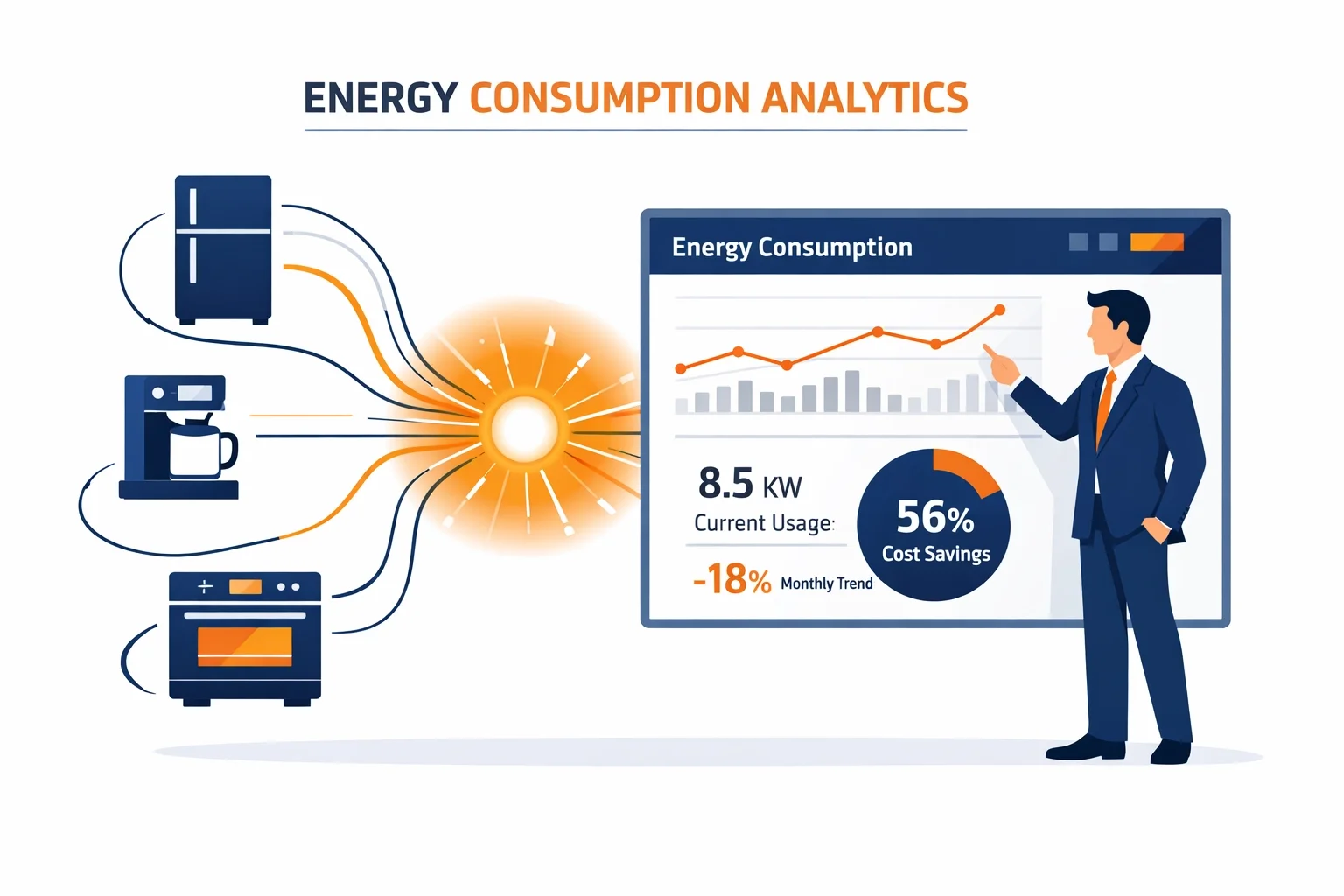
How do you know if your walk-in fridge is leaking cold air or if your HVAC is running 24/7 when it shouldn't be? Most owners wait for the paper bill to arrive at the end of the month. By then, it’s too late to fix the problem.
In 2026, "guessing" is not a strategy. You need the same level of insight that manufacturers use when they monitor wholesale energy rates for manufacturers.
The Fix: Use a tool like Energy Tracker Pro. This is our proprietary utility management software that gives you a "dashboard" view of your energy spend across all locations. It flags anomalies, tracks market trends, and ensures you aren't being overbilled by suppliers. If you aren't measuring it, you can't manage it.
7. Going at It Alone (The DIY Mistake)
You wouldn't try to fix a complex refrigeration system or your restaurant's plumbing by yourself: you’d call a pro. Yet, many owners try to navigate the complex world of energy procurement on their own. They take a few calls from brokers, get a pile of quotes that aren't "apples-to-apples," and end up picking the wrong one because they don't have the time to do a proper analysis.
Working with an independent consultant: like United Energy Consultants: is the "cheat code" for energy management. We aren't a supplier. We are an independent broker with over 80 supplier contacts. We work for you, not the power company.
The Fix: Leverage a consultant who offers zero out-of-pocket costs. We get paid by the suppliers to bring them high-quality business, meaning you get expert advice and better rates without a consulting fee on your balance sheet.
The 2026 Energy Outlook: Why You Need to Act Now
The energy landscape in the Tri-State area is changing fast. We are seeing a massive shift toward electrification, and while that’s great for the environment, it’s putting a strain on the aging infrastructure in NY and NJ.
When you combine that with the volatility of natural gas prices (which still drive much of our electricity generation), you have a recipe for budget-busting surprises. If you want to keep your restaurant profitable in this environment, you have to be proactive.
At United Energy Consultants, we pride ourselves on being more than just "the energy guys." We’re your partners in business stability. Whether you’re running a single-site bistro in Hoboken or a chain of fast-casual spots across the Tri-State area, we have the tools: like Energy Tracker Pro: and the expertise to keep your costs down.

Summary of the Fixes:
Audit your current contract: Check for "teaser" rates and hidden fees.
Leverage April pricing: Don't wait for the summer peak to renew.
Stagger your equipment: Lower your peak demand charges.
Use technology: Monitor your usage in real-time with Energy Tracker Pro.
Get professional help: Partner with an independent broker to compare the entire market at no cost to you.
Don't let your energy bill eat your margins. In a business where every penny counts, your electricity rate shouldn't be an afterthought.
Ready to see what you could be saving? Let’s take a look at your recent bill and see if we can find some "hidden" money. Visit us at uecnow.com to get started.