
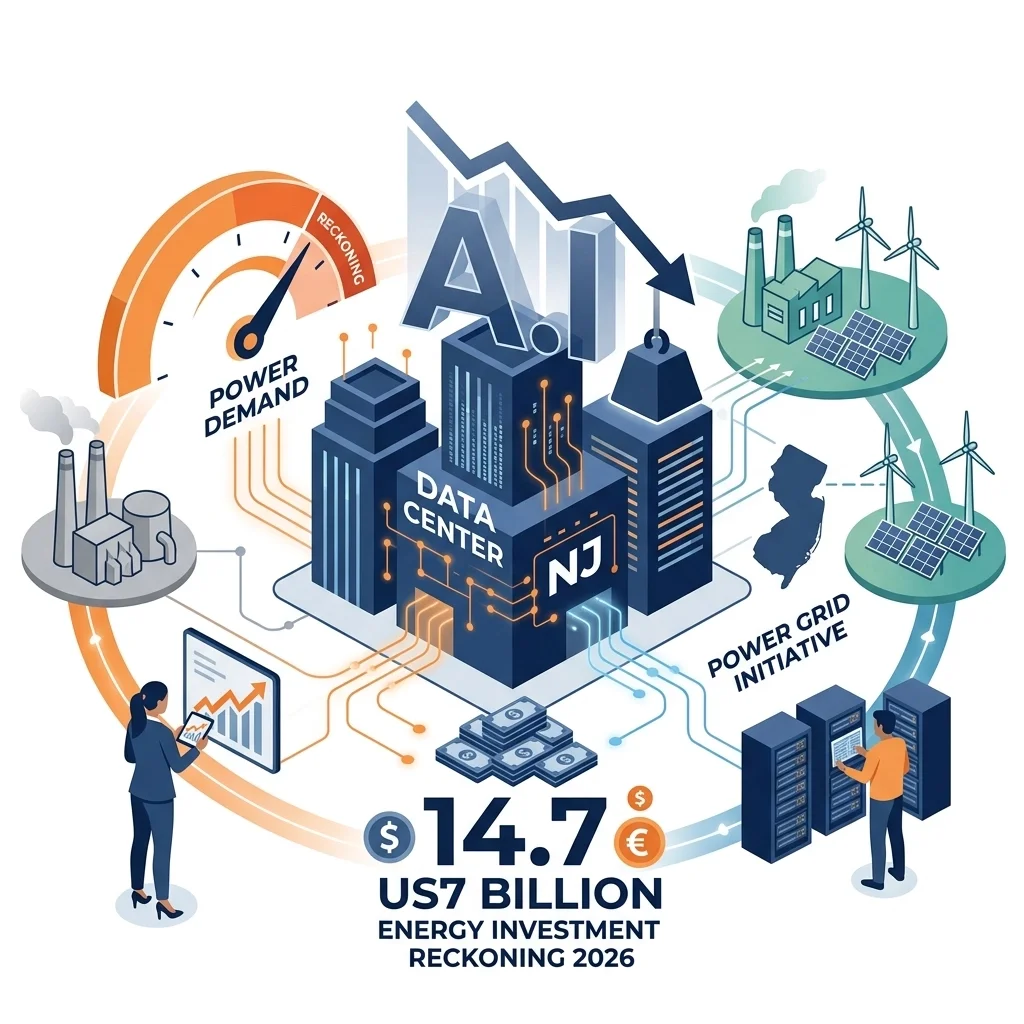
If you’re running a data center in New Jersey or anywhere across the PJM footprint right now, you already know that the "AI Gold Rush" is a double-edged sword. On one side, the demand for high-density compute is off the charts. On the other, the physical infrastructure: the grid, the power plants, and your monthly utility bill: is screaming for mercy.
We’ve been warning our clients at United Energy Consultants about the "Great Energy Thaw," but for the data center sector, it’s more like a "Great Energy Squeeze." While natural gas prices might be cooling off, a new, much larger monster has arrived: Capacity.
In the latest PJM capacity auction, the bill for the region jumped by a staggering $14.7 billion. This isn't a theoretical number. This is a direct cost that is currently being baked into 2026 contracts. If you haven't looked at your energy procurement strategy in the last 90 days, you aren't just behind the curve: you’re likely staring down a budget shortfall that could jeopardize your operational margins.
The $14.7 Billion Elephant in the Server Room
To understand why this is happening, we have to look at the "Capacity" charge on your bill. In simple terms, capacity is the "reservation fee" you pay to ensure the grid can handle your peak demand. For a data center, which runs at a high load factor 24/7, capacity is the silent killer of the P&L.
The PJM Interconnection, which coordinates the movement of wholesale electricity in NJ and 12 other states, recently saw auction prices skyrocket. Why? Because we are retiring old coal and gas plants faster than we can plug in new renewables. Meanwhile, AI data centers are expected to account for nearly 70% of all new power demand in the state.
This creates a massive supply-and-demand imbalance. You’re essentially competing with every other hyperscaler and enterprise facility for a shrinking pool of reliable "firm" power. When supply drops and demand (driven by AI) spikes, the price for capacity goes through the roof. That $14.7 billion hike is the market’s way of saying: "We’re running out of room."
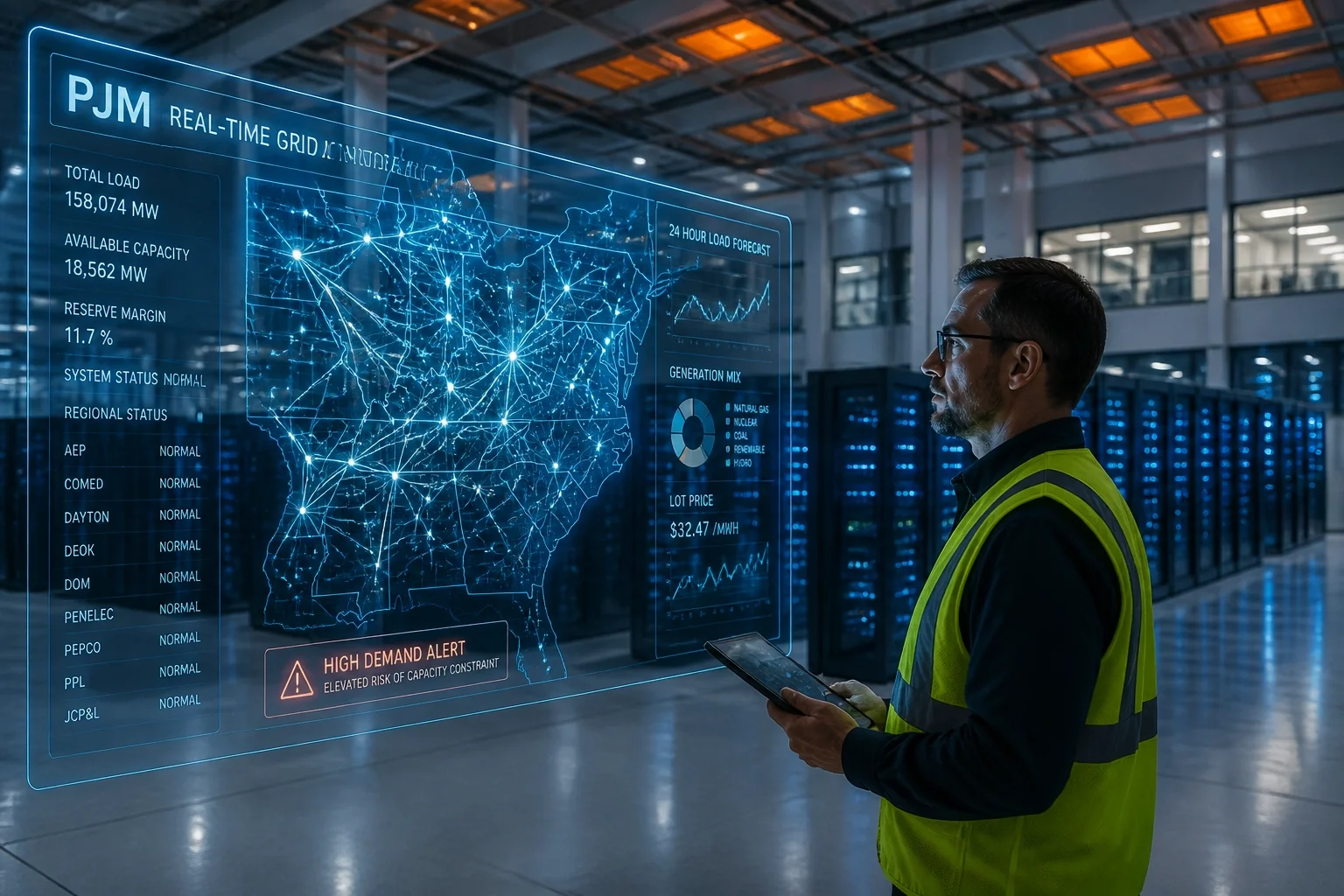
The Shift to "Bring Your Own Power" (BYOP)
We are entering a new era of interconnection. For years, you could pick a site, build a shell, and trust the utility to drop a substation and feed you whatever megawatts you needed. Those days are over.
There are currently intense discussions happening at the FERC (Federal Energy Regulatory Commission) and within PJM regarding "Large Load" requirements. The buzzword in 2026 is "Bring Your Own Power." We’re seeing proposals that would require large-scale data centers (think 100MW+) to actually provide or fund their own generation sources before they can even get an interconnection agreement.
Whether it’s co-locating with nuclear plants or investing in massive behind-the-meter gas turbines, the message is clear: the grid can no longer subsidize the massive appetite of AI. If you are planning an expansion or a new build, your energy strategy isn’t just about "buying low": it’s about proving you won't crash the local grid.
Why April and May are the "Goldilocks Zone"
Even with the capacity hike looming, there is a silver lining for New Jersey operators right now. We call it the "Goldilocks Zone."
Historically, April and May represent the best time to lock in energy supply contracts. The winter heating demand has vanished, and the summer cooling surge hasn't hit yet. In 2026, this window is especially critical. With the $14.7 billion capacity increase already priced into the future market, locking in your supply rates now can help offset the massive riders that are coming.
If you wait until the July heatwaves hit, you’ll be buying in a volatile market where every spike in the thermometer sends the wholesale price into the stratosphere. At United Energy Consultants, we’re helping our data center clients navigate this by identifying the exact moment to pull the trigger on fixed-price contracts. You can read more about why this timing is so crucial in our deep dive on the 2026 energy buyers' dilemma.
Strategies to Survive the Squeeze
So, how do you protect your facility? It’s not just about finding a cheaper supplier; it’s about managing your intensity.
1. PUE Optimization and Beyond
Most facility managers focus on Power Usage Effectiveness (PUE) to save on cooling. But in 2026, PUE is just the baseline. You need to look at Power Quality and Peak Shaving. If you can reduce your load during the grid’s five highest peak hours of the year (the "5 Coincident Peaks"), you can dramatically lower your capacity obligation for the following year.
2. Behind-the-Meter (BTM) Generation
We are seeing a massive surge in data centers installing on-site fuel cells or micro-turbines. By generating a portion of your own power, you bypass a significant chunk of those $14.7 billion in regional charges. It provides both price stability and the "five nines" of reliability that AI workloads demand.
3. Real-Time Monitoring with Energy Tracker Pro
You can't manage what you don't measure. For hyperscalers and co-location providers, the difference between a profitable month and a loss is often found in the "demand charges."
We provide our clients with Energy Tracker Pro, a proprietary tool that monitors real-time intensity. It allows you to see exactly when your demand is peaking and provides the data needed to participate in lucrative demand response programs. When the grid is stressed, you can actually get paid to throttle back non-critical loads. Check out how demand response can turn usage into savings.
The UEC Advantage: Why Independence Matters
Look, there are plenty of brokers out there who will throw a spreadsheet at you and tell you to pick the lowest number. But the data center industry is too complex for that. You need a partner who understands the wholesale relationships and the nuances of the PJM market.
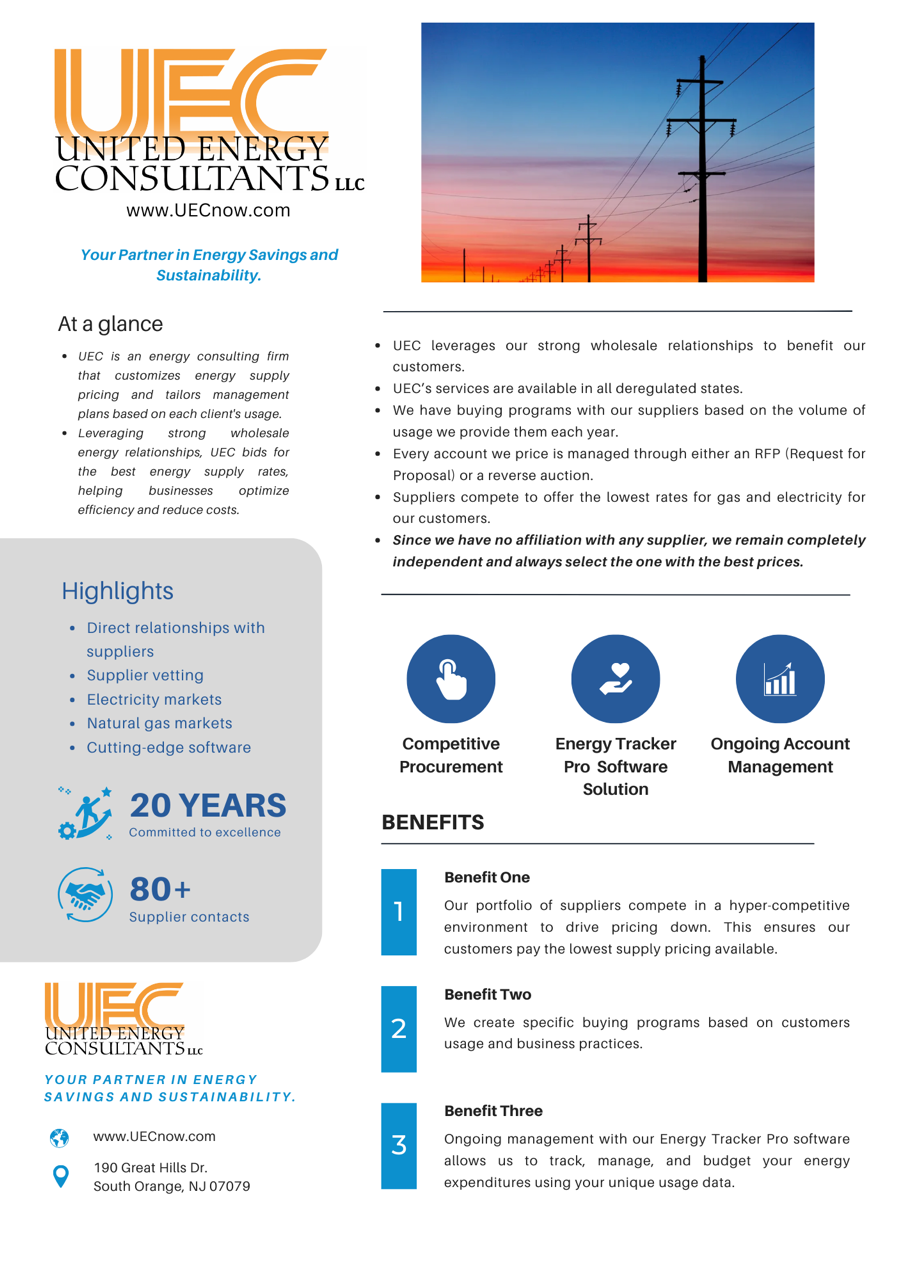
At United Energy Consultants, we’ve been at this for over 20 years. We aren't tied to any single supplier. We maintain relationships with over 80 wholesale providers, which means we can force them to compete for your load.
More importantly, our services come at zero out-of-pocket cost to you. We get paid by the suppliers, but our loyalty stays with the client. In a year where energy costs are threatening to derail the AI revolution in New Jersey, having an independent expert in your corner isn't a luxury: it’s a necessity.
Don't Get Left in the Dark
The $14.7 billion capacity reckoning is already here. The data centers that thrive in 2026 will be the ones that stop treating energy as a "utility bill" and start treating it as a strategic asset.
Whether you’re looking to lock in during the current Goldilocks Zone, or you need to audit your current facility’s efficiency to see where you’re bleeding money, we’re here to help. The "AI Squeeze" is real, but with the right data and the right timing, you can keep your servers humming without breaking the bank.
Ready to see how the capacity hike will impact your specific facility? Let’s take a look at your latest bill and run the numbers through Energy Tracker Pro. We’ll show you exactly where you stand: and how to get ahead of the storm.

For more insights on navigating the complex NJ energy market, check out our guide on the data center boom's impact on regional energy bills or explore how to improve efficiency without major capital investment.