
Switch Smarter, Not Harder: Your 2026 Guide to Better Business Energy Rates
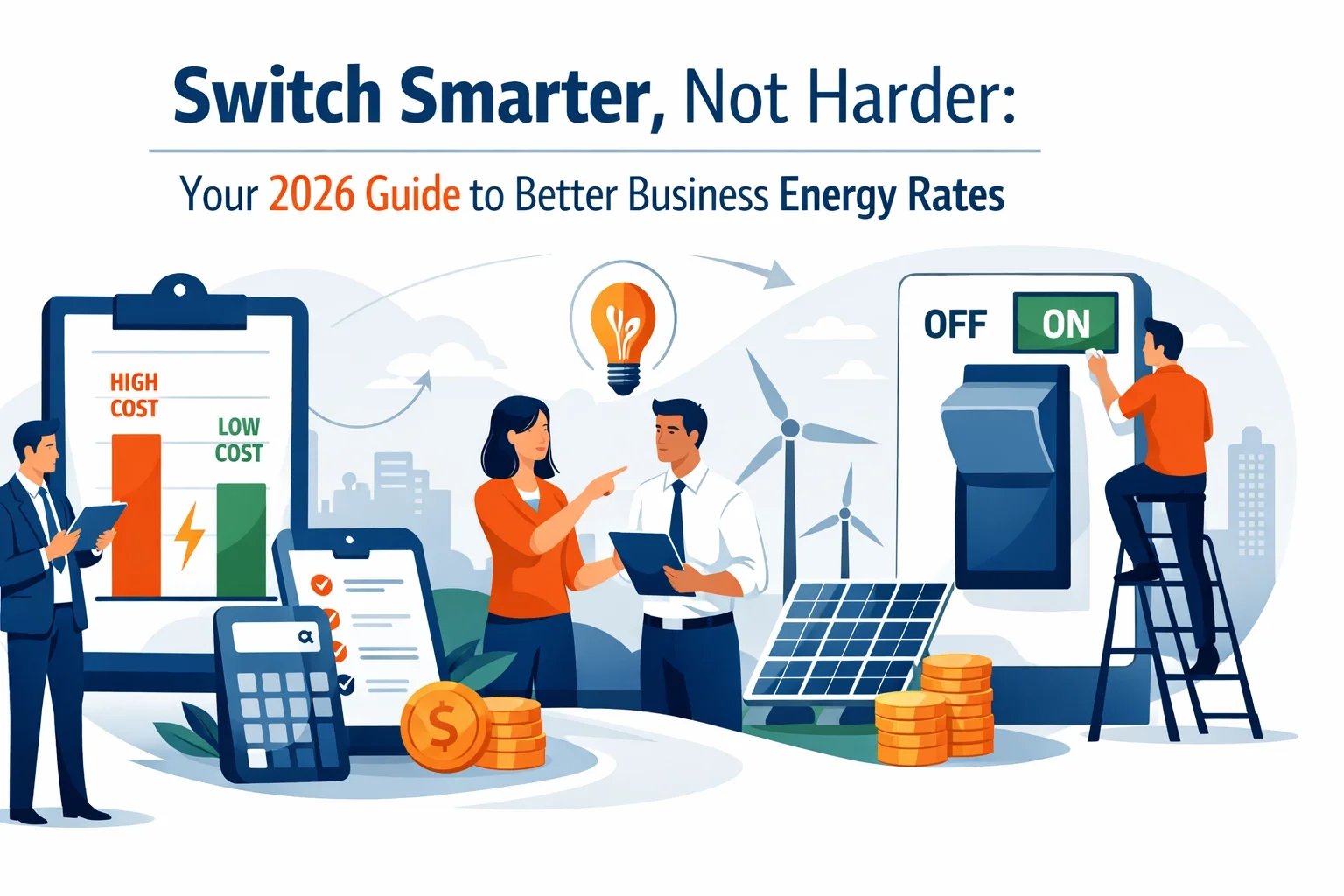
In today’s unpredictable energy market, businesses across New York and the Tri-State area are facing a critical realization: the "old way" of managing utility costs is no longer sustainable. As of March 2026, the energy landscape has shifted significantly. We’ve seen commercial electricity rates climb over 33% since 2020, with a sharp 5.3% jump in the last year alone. For a business owner in Manhattan or a manufacturer in New Jersey, these aren't just statistics: they are direct hits to the bottom line.
The good news? You don’t need to overhaul your entire operation or invest in expensive new machinery to start saving. The most effective strategy for 2026 is simple: switch smarter, not harder.
Why Energy Rates Matter More Than Ever in 2026
Energy remains one of the most significant operational expenses for Tri-State businesses. Whether you are running a high-traffic restaurant in Queens or managing a cold storage facility in Newark, power is a constant requirement. Yet, it’s often treated as a fixed cost: a "utility" that you simply pay without question.
In a deregulated market, this passivity is expensive. What many business owners don’t realize is that energy rates are highly negotiable. With fluctuating global supply chains and new regional grid initiatives, the gap between the "default" utility rate and a strategically negotiated contract can be thousands of dollars per month.
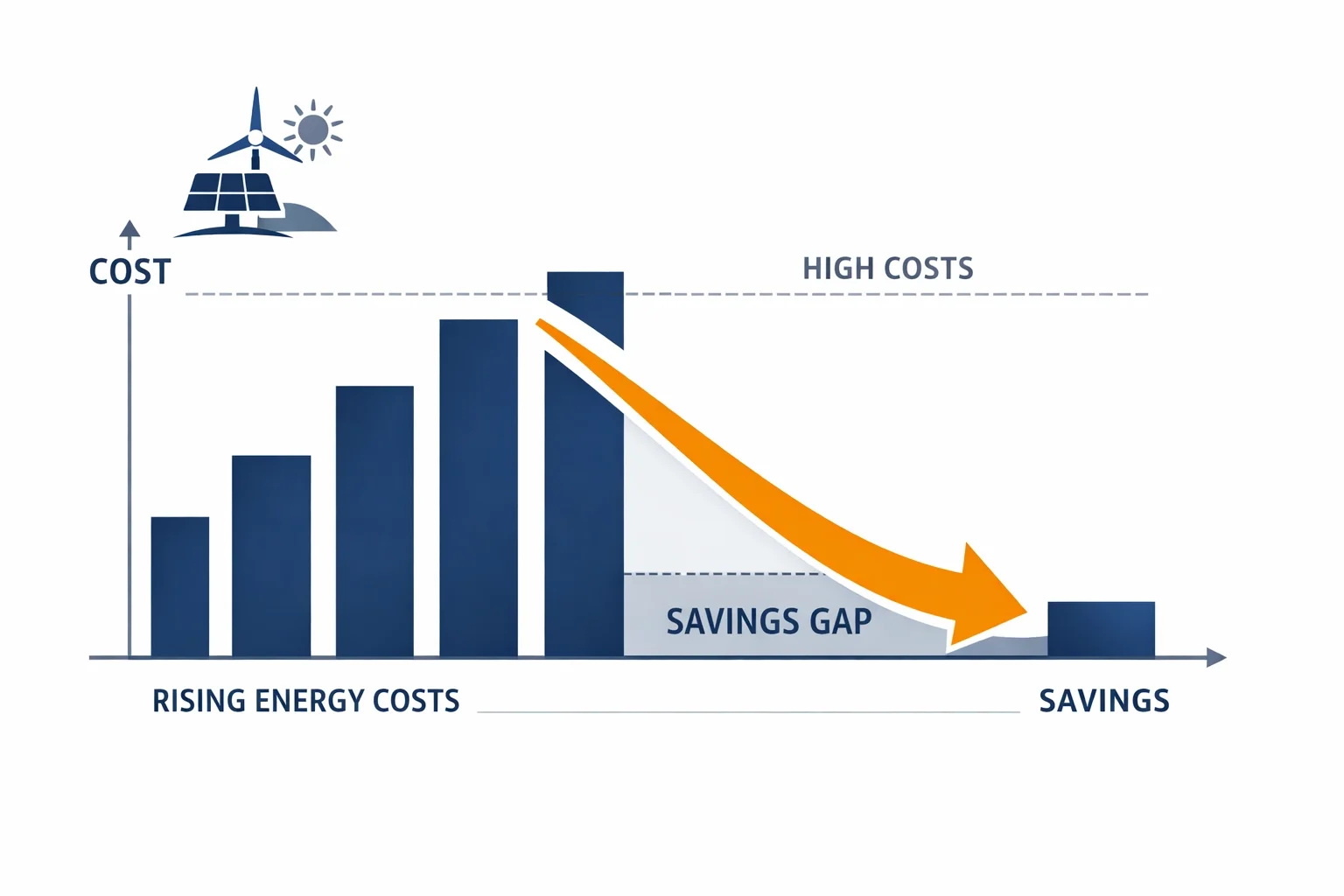
A professional data chart showing rising energy trends in 2026 and potential savings gaps for businesses.
Understanding the Cost by Business Type
To put this in perspective, let’s look at the current estimated monthly bills based on March 2026 averages:
Small Office (1,500 sq ft): $212–$353/month
Retail Store: $424–$847/month
Restaurant: $565–$1,130/month
Warehouse/Distribution: $2,824–$7,060/month
If you are paying more than these benchmarks, you are likely stuck in an outdated contract or a "variable" trap. Navigating this requires a clear, five-step strategy.

Step 1: Understand Your Current Energy Contract
Before you can move forward, you have to know where you stand. Many business owners are surprised to find they are currently in a "holdover" status or have been rolled into a variable rate without a clear notification.
When reviewing your current agreement, look for these four "red flags":
Contract Type: Are you on a fixed rate, or is your price fluctuating every month?
Expiration Date: If you miss your renewal window, you might be hit with 7 energy contract mistakes that will cost you thousands.
Hidden Fees: Look for "ancillary charges" or "capacity tags" that might be inflating your base rate.
Usage Patterns: Do you pay more during "peak demand" hours?
Without this clarity, it’s impossible to compare apples to apples when looking at new offers.
Step 2: Choose the Right Rate Structure
Not all energy plans are created equal. In 2026, the "best" plan depends entirely on your risk tolerance and operational goals.
Fixed Rates: These provide maximum stability. You lock in a price per kWh for 12, 24, or even 36 months. This is the gold standard for businesses that need strict budget predictability. We’ve discussed why fixed-price energy contracts matter more than ever for business stability in our recent market analysis.
Variable Rates: These can offer lower costs when the market dips, but they leave you exposed to price spikes: like the recent 27% jump in natural gas prices.
Hybrid Options: A balanced approach that allows you to fix a portion of your load while leaving the rest to the market.
For most Tri-State businesses, especially those in hospitality or retail, the peace of mind provided by a fixed rate outweighs the gamble of the spot market.
Step 3: Time the Market Strategically
Energy is a commodity, just like gold or coffee. Prices fluctuate based on weather patterns, global geopolitics, and infrastructure changes. For example, the current transition toward renewable energy in New York and New Jersey is creating unique "windows" of opportunity where supply outpaces demand temporarily.
However, timing the market isn't something most business owners have the time to monitor daily. You shouldn't have to watch energy futures while you're trying to manage a staff of fifty. Deciding whether to lock in now or wait requires historical data and predictive modeling.
Step 4: Work With an Energy Consultant
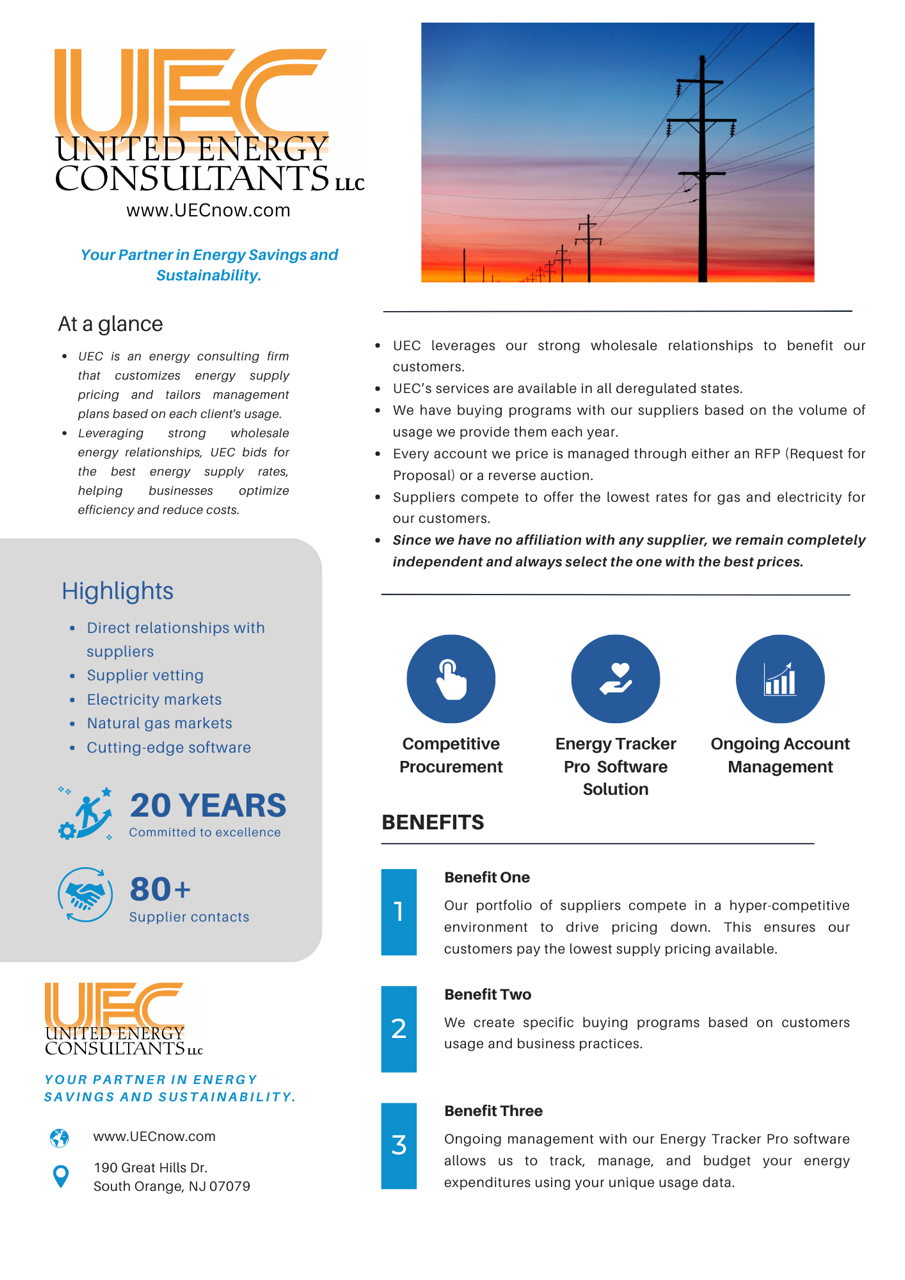
Navigating the energy market alone can be overwhelming. This is where United Energy Consultants (UEC) changes the game. Unlike "brokers" who might represent only a handful of providers, UEC is completely independent.
With over 20 years of experience in the New York metropolitan area, we have built a network of over 80 vetted suppliers. Our unique position allows us to:
Compare Multiple Suppliers: We make them compete for your business, driving the rate down.
Leverage Technology: Our proprietary Energy Tracker Pro software monitors your account and the market in real-time.
Zero Out-of-Pocket Cost: Our fees are typically covered by the suppliers through the sheer volume of business we bring to the table. You get expert consulting without a line-item expense on your budget.
Whether you are looking for energy saving strategies for cold storage or simply trying to lower the overhead for a gym or fitness studio, having an advocate in your corner ensures you aren't just switching, but winning.
Step 5: Make the Switch Seamlessly
One of the biggest misconceptions we hear from business owners is the fear of a service interruption. Let’s set the record straight: Your lights will not flicker.
Your energy is still delivered through the same grid, over the same wires, by the same utility (like ConEd or PSE&G). The only thing that changes is the "Supply" portion of your bill and the rate you pay. The switch is purely administrative. There is no equipment to install, no wires to pull, and zero downtime for your operations. It is truly the most "frictionless" way to improve your profit margins.
Sector-Specific Strategies for the Tri-State Area
In 2026, the strategy that works for a law firm in White Plains might not be the best fit for a hotel in Manhattan.
Real Estate & Property Management: Use a "master aggregation" strategy to combine the usage of multiple buildings into one large contract to unlock bulk pricing.
Restaurants: Look into mini-battery programs to shave off peak demand charges during the dinner rush.
Manufacturing: Focus on long-term fixed contracts to protect against the volatility of the 2026 transition.
The Smarter Way Forward
Switching energy providers isn’t just about the next twelve months; it’s about taking control of your operational future. By moving away from the "default" and toward a managed, strategic approach, Tri-State businesses can:
Reduce overhead expenses immediately.
Improve budget predictability for the next 2–3 fiscal years.
Support sustainability goals by opting for green energy mixes without the premium price tag.
Ready to Switch Smarter?
At United Energy Consultants, we’ve spent two decades helping businesses across New York, New Jersey, and Connecticut navigate these exact waters. We don't just find you a "cheaper rate": we build a comprehensive energy strategy tailored to your specific facility and goals.
Don’t leave your energy costs to chance in an increasingly expensive market. Whether you want to review your current contract or explore how deregulation actually lowers your bills, our team is here to guide you.
Contact United Energy Consultants today and let’s put those 20 years of experience to work for your bottom line.