
The 2026 Hotelier’s Survival Guide: Lowering Utility Costs Without Sacrificing Guest Comfort

If you’re running a hotel in New Jersey or anywhere else in the PJM territory right now, you probably feel like you’re hosting a guest who refuses to leave, breaks the furniture, and steals the mini-fridge every single night. That guest? It’s your utility bill.
Specifically, we’re talking about the recent shockwaves from the PJM capacity auction. While your guests are complaining that the fluffy towels aren't fluffy enough, the grid is handing you a bill that looks like a high-stakes poker debt. But here’s the kicker: you can’t just turn off the AC in the lobby or tell your guests to take cold showers. In the hospitality world, "comfort is king," but in 2026, "cost is the executioner."
At United Energy Consultants, we’ve seen this movie before, but the 2026 sequel has a nasty twist. Let’s break down how you can keep your guests cool and your margins from melting.
The $329.17 Hammer: The "Hidden Tax" on Your Hotel
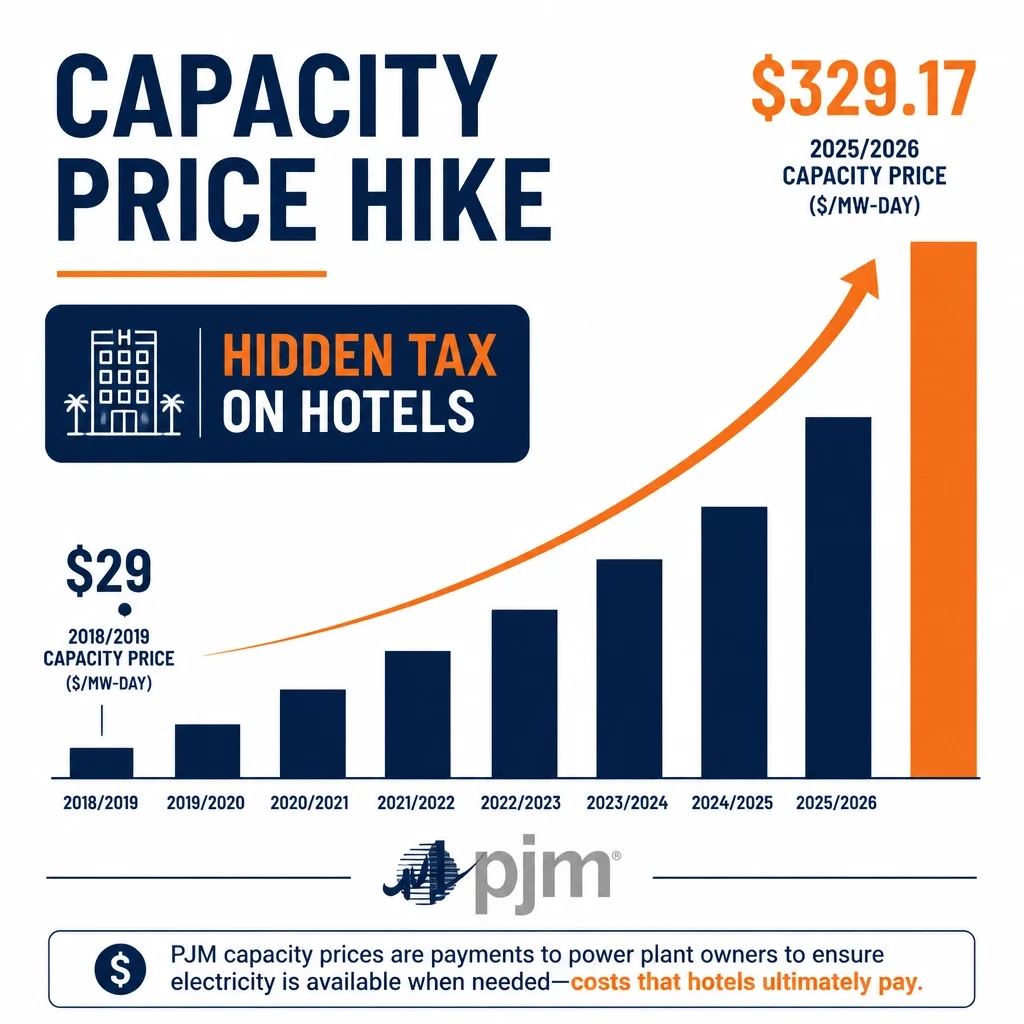
You might have missed the headline between managing a wedding party and a plumbing emergency, but the PJM capacity auction for the 2026/2027 year recently cleared at a staggering $329.17/MW-day. To put that in perspective, just two years ago, that price was around $29.
This isn't just a "slight increase." It is an 11-fold jump in the price of "capacity": which is basically the fee you pay just for the privilege of being connected to the grid so it can handle your peak demand. For a mid-sized full-service hotel, this "hidden tax" could easily add $15,000 to $35,000 to your annual business energy costs in NJ without you using a single extra kilowatt-hour.
Understanding the "5-Hour Rule" and Your PLC Tag
In the world of wholesale energy rates, your hotel is assigned a Peak Load Contribution (PLC) tag. Think of this as your "energy weight." The heavier you are during the grid's most stressed moments, the more you pay for capacity all year long.
PJM determines this tag using the "5-hour rule." They look back at the five hours during the summer when the entire grid was under the most pressure: usually the hottest, most humid afternoons between 2 PM and 6 PM.
If your hotel is running every chiller, laundry press, and kitchen oven at 3:30 PM on a 98-degree Tuesday in July, your PLC tag is going to be massive. You’ll be paying for that one afternoon of peak usage every single month for the next year.
4 Practical Tactics to Beat the 2 PM – 6 PM Hustle
You can’t tell a guest they can’t check into a cool room at 3 PM. However, you can be smarter about how you get there. Here’s how to lower your PLC tag without a single guest noticing a change in temperature.
1. The Pre-Cooling Masterstroke
Don't wait until 2 PM to start fighting the heat. Use your HVAC system to "pre-cool" your common areas (lobbies, ballrooms, hallways) to 68 degrees at 11 AM. When the peak window hits at 2 PM, you can "drift" the temperature up to 72 degrees. The thermal mass of the building will keep the air feeling crisp, but your chillers won't be red-lining when the grid prices are at their highest.
2. Stagger the Laundry Cycles
Laundry is an energy hog. If your housekeeping team is firing up the heavy-duty dryers right in the middle of the 2 PM – 6 PM window, you’re essentially lighting money on fire. Shift your heavy laundry cycles to the morning or late evening. Keeping those industrial motors off during peak hours is one of the easiest ways to shave points off your PLC tag.
3. Deploy AI-Driven Thermostats
If you’re still using manual thermostats in guest rooms, you’re living in 2005. Modern, AI-driven thermostats can detect when a guest has left the room and adjust the temperature slightly. More importantly, they can be integrated into a demand response strategy that subtly adjusts setpoints across 200 rooms by just 1 or 2 degrees during a peak alert. The guest won't feel the difference, but your meter certainly will.
4. Shadow Management of the Back-of-House
Your kitchen and pool pumps don't need to run at 100% capacity during the peak window. Schedule pool filtration for the overnight hours. If the kitchen isn't in a "rush" period, dim the back-of-house lights and ensure walk-in fridge doors aren't being propped open.
Energy Tracker Pro: Your Secret Weapon Against Peak Alerts
How do you know exactly when those five critical hours are happening? You don't want to be guessing when $329.17/MW-day is on the line.
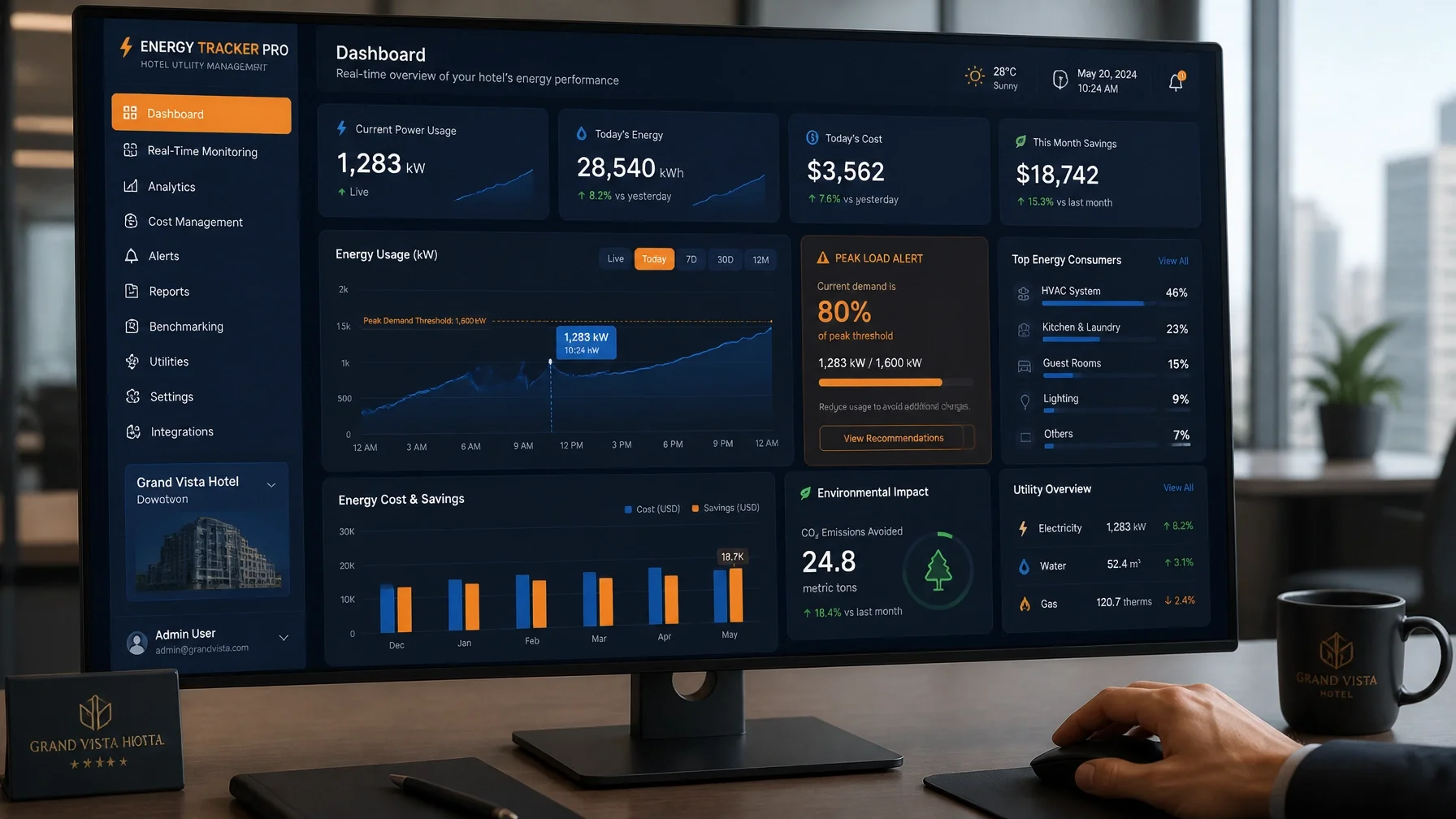
This is where Energy Tracker Pro comes in. As the essential hotel utility management software, it provides real-time data and, more importantly, Peak Load Alerts.
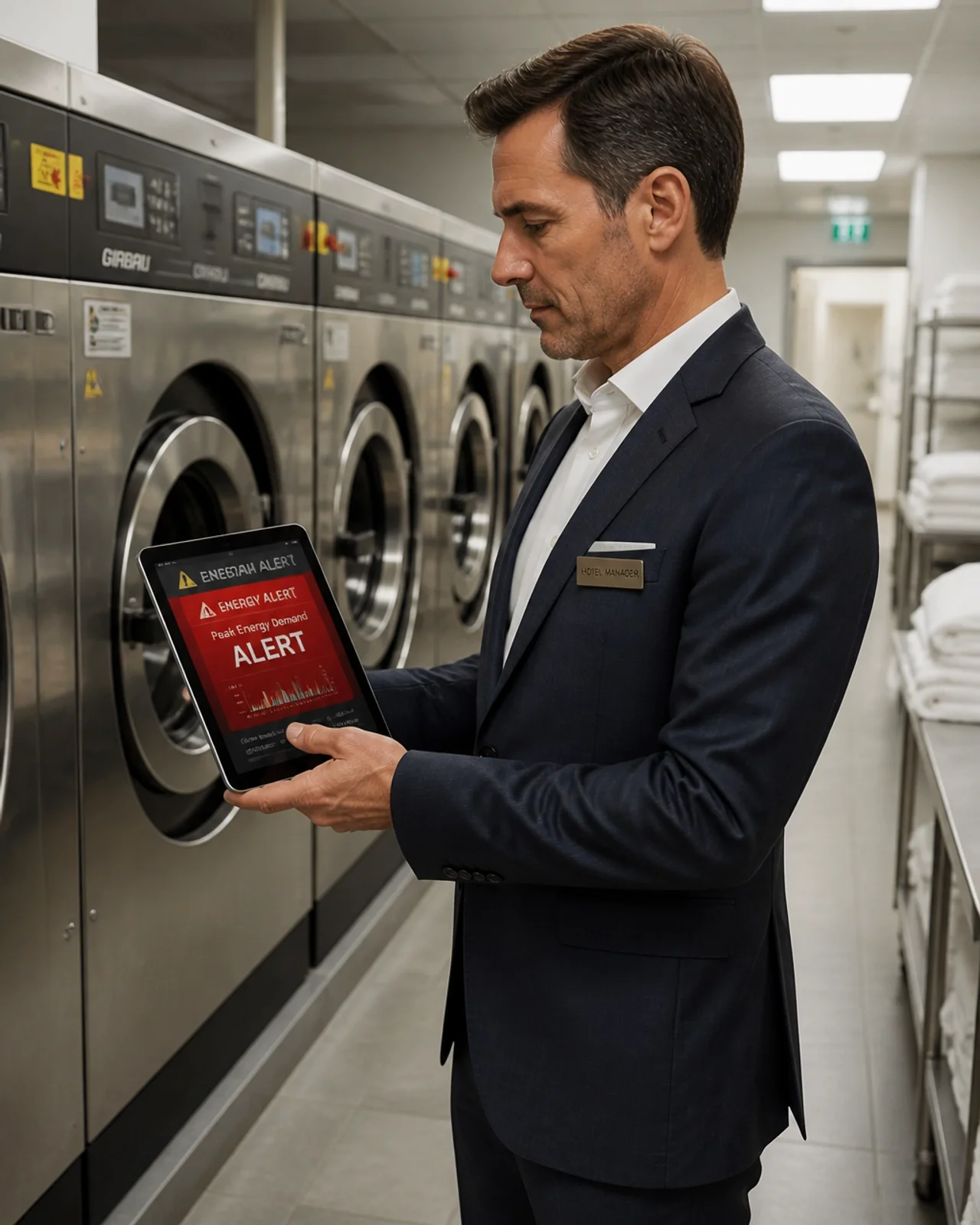
When the PJM grid is approaching a coincident peak, Energy Tracker Pro sends an alert to your engineering team or general manager. This gives you a 2-hour head start to implement your "2 PM – 6 PM" playbook. You can't manage what you can't measure, and in 2026, you can't afford to be measuring your energy usage via a paper bill that arrives 30 days too late.
The Bottom Line: Be the Hero, Not the Victim
The energy market in New Jersey is changing faster than a guest's mind about their room view. The record-high capacity prices are a challenge, but they are also an opportunity. The hotels that ignore these "grid taxes" will see their profits eroded by utility line items they don't understand.
The hotels that adapt: by managing their PLC tags, utilizing smart software, and choosing sophisticated procurement strategies: will find they have a significant competitive advantage. You don't have to sacrifice guest comfort to save money; you just have to be the smartest operator in the room.
Ready to see how much your PLC tag is costing you?
At United Energy Consultants, we provide a zero out-of-pocket analysis of your energy usage. We’ll look at your data, identify your peak risks, and show you exactly how much Energy Tracker Pro can save your property.
Contact United Energy Consultants today for your free Energy Strategy Audit.